

Lesson Objectives – the students should be able to:
- Explain how a simple battery can produce an electrical current.
- Define current, ampere, emf, voltage, resistance, resistivity, and temperature coefficient of resistance.
- Write the symbols used for electromotive force, electric current, resistance, resistivity, temperature coefficient of resistance and power and state the unit associated with each quantity.
- Distinguish between a) conventional current and electron current and b) direct current and alternating current.
- Know the symbols used to represent a source of emf, resistor, voltmeter, and ammeter and how to interpret a simple circuit diagram.
- Given the length, cross sectional area, resistivity, and temperature coefficient of resistance, determine a wire’s resistance at room temperature and some higher or lower temperature.
- Solve simple dc circuit problems using Ohm’s law.
- Use the equations for electric power to determine the power and energy dissipated in a resistor and calculate the cost of this energy to the consumer.
- Distinguish between the rms and peak values for current and voltage and apply these concepts in solving problems involving a simple ac circuit.
- Compute Power in Household Circuits
- Understand the Microscopic View of Electric Current
- Learn the concept of Superconductivity
- Could understand the Electrical Conduction in the Human Nervous System
Lecture on Electric Currents PPT
DaysHoursMinSec
This offer has expired!
Back to Homepage
Summary of Chapter 18
- A battery is a source of constant potential difference.
- Electric current is the rate of flow of electric charge.
- Conventional current is in the direction that positive charge would flow.
- Resistance is the ratio of voltage to current:

- Ohmic materials have constant resistance, independent of voltage.
- Resistance is determined by shape and material:

- ρ is the resistivity.
- Power in an electric circuit:

- Direct current is constant
- Alternating current varies sinusoidally

- The average (rms) current and voltage:

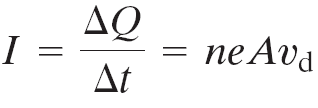
- Relation between drift speed and current:


Units of Chapter 18 – Keywords
- The Electric Battery
- Electric Current
- Ohm’s Law: Resistance and Resistors
- Resistivity
- Electric Power
- Power in Household Circuits
- Alternating Current
- Microscopic View of Electric Current
- Superconductivity
- Electrical Conduction in the Human Nervous System
- Volta
- electrolyte
List of Applied Physics / Physics 2 Lectures
Download Lecture
credit: Giancoli Physics©2013 www.PinoyBIX.org
Related Content


Please do Subscribe on YouTube!
P inoyBIX educates thousands of reviewers and students a day in preparation for their board examinations. Also provides professionals with materials for their lectures and practice exams. Help me go forward with the same spirit.
“Will you subscribe today via YOUTUBE?”
What You Also Get: FREE ACCESS & DOWNLOAD via GDRIVE
TIRED OF ADS?
- Become Premium Member and experienced complete ads-free content browsing.
- Full Content Access to Premium Solutions Exclusive for Premium members
- Access to PINOYBIX FREEBIES folder
- Download Reviewers and Learning Materials Free
- Download Content: You can see download/print button at the bottom of each post.
PINOYBIX FREEBIES FOR PREMIUM MEMBERSHIP:
- CIVIL ENGINEERING REVIEWER
- CIVIL SERVICE EXAM REVIEWER
- CRIMINOLOGY REVIEWER
- ELECTRONICS ENGINEERING REVIEWER (ECE/ECT)
- ELECTRICAL ENGINEERING & RME REVIEWER
- FIRE OFFICER EXAMINATION REVIEWER
- LET REVIEWER
- MASTER PLUMBER REVIEWER
- MECHANICAL ENGINEERING REVIEWER
- NAPOLCOM REVIEWER
- Additional upload reviewers and learning materials are also FREE
FOR A LIMITED TIME
If you subscribe for PREMIUM today!
You will receive an additional 1 month of Premium Membership FREE.
For Bronze Membership an additional 2 months of Premium Membership FREE.
For Silver Membership an additional 3 months of Premium Membership FREE.
For Gold Membership an additional 5 months of Premium Membership FREE.
Join the PinoyBIX community.
DaysHoursMinSec
This offer has expired!