

Complex numbers is one of the most reliable topics on the Philippine engineering board exam. It appears in Engineering Mathematics for every board — ECE, EE, ME, CE, ChE, and more. It connects directly to AC circuit analysis, phasor representation, impedance, Laplace transforms, and Fourier analysis. Master this topic and you are not just answering one section of the board exam. You are building the mathematical foundation that supports half of your engineering subjects.
This page is the complete hub for the PinoyBIX Complex Numbers ECE and EE Board Exam Reviewer Series. It contains a consolidated formula reference sheet covering all four parts of the series, a 25-item multiple choice practice exam drawn from all topics, and a full navigation guide to every post in the series. If you are short on time, start with the formula sheet. If you want to test yourself before the board exam, go straight to the practice exam.
- ECE (Electronics Engineer) — High frequency. Appears in Engineering Mathematics and Electronics subjects. All four topics in this series are tested. Expect 8 to 15 items total across the board exam.
- EE (Electrical Engineer) — Very high frequency. Complex numbers underpin the entire Electrical Circuits subject through impedance and phasor analysis. All four topics tested. Critical subject area.
- ME (Mechanical Engineer) — Moderate frequency. Engineering Mathematics covers forms, operations, and De Moivre’s theorem. AC circuit applications appear in Electrical Technology.
- CE (Civil Engineer) — Moderate frequency. Engineering Mathematics covers forms, operations, and basic De Moivre’s theorem. Power and impedance appear occasionally.
- ChE (Chemical Engineer) — Moderate frequency. Complex numbers appear in Engineering Mathematics and in process control through transfer functions and the Laplace variable
 .
. - GeE (Geodetic Engineer) — Low to moderate frequency. Basic forms and operations are tested in Engineering Mathematics.
- MetE and MinE — Low frequency. Basic forms, powers of
 , and operations appear in Engineering Mathematics.
 - Naval Architect and Marine Engineer — Moderate frequency. Impedance, phasors, and vibration analysis all use complex number mathematics.
The Complete Series — Four Parts
Each part of this series builds on the previous one. If you are new to complex numbers, read the parts in order. If you are reviewing a specific topic for the board exam, jump directly to the part you need.
| Part | Topic | Key Concepts | Best For |
|---|---|---|---|
| Part 1 | Forms and the j-Operator | Four forms, Argand diagram, modulus, argument, powers of  , Euler’s formula , Euler’s formula |
All boards — foundational |
| Part 2 | Operations | Addition, subtraction, multiplication, division, conjugate method, form selection rules | All boards — core computation |
| Part 3 | De Moivre’s Theorem | Integer powers, all nth roots, root spacing, principal root, root circle diagram | ECE, EE, ME, CE, ChE |
| Part 4 | AC Circuits and Applications | Impedance, phasors, Ohm’s law, series and parallel circuits, complex power, power factor | ECE, EE — critical topic |
How to Use This Series
If you have two weeks before the board exam, work through all four parts in order over the first week. Take the 25-item practice exam at the bottom of this page at the end of week one. Check your score against the answer key. For every item you got wrong, go back to the relevant part of the series, read the worked example that covers that problem type, and solve a similar problem from scratch before moving on.
If you have three days or less, go directly to the formula sheet below. Screenshot it or save it. Then take the practice exam and check your answers. Focus your remaining review time only on the topics where you got items wrong.
| Day | Activity | Time |
|---|---|---|
| Day 1 | Read Part 1 — Forms and j-Operator. Work all 10 practice problems. | 90 minutes |
| Day 2 | Read Part 2 — Operations. Work all 10 practice problems. | 90 minutes |
| Day 3 | Read Part 3 — De Moivre’s Theorem. Work all 10 practice problems. | 90 minutes |
| Day 4 | Read Part 4 — AC Circuits. Work all 10 practice problems. | 2 hours |
| Day 5 | Take the 25-item practice exam below. No notes. Timed at 40 minutes. | 40 minutes |
| Day 6 | Review answer key. Study full solutions for items you got wrong. | 60 minutes |
| Day 7 | Review formula sheet. Solve 5 additional problems from memory. | 45 minutes |
Quick Reference Formula Sheet
This consolidated formula sheet covers every key formula from all four parts of the series. Screenshot this section and keep it accessible during your review. On exam day, every formula on this sheet should come from memory — not from the screenshot.
Standard rectangular form:
![\[z = a + jb \qquad \text{Re}(z) = a \qquad \text{Im}(z) = b\]](https://pinoybix.org/wp-content/ql-cache/quicklatex.com-d4d82359efae9aab6a383a2222dc74c9_l3.png "Rendered by QuickLaTeX.com")
Polar form:
![\[z = r\angle\theta \qquad r = \sqrt{a^2 + b^2} \qquad \theta = \arctan\!\left(\dfrac{b}{a}\right) \text{ (adjust for quadrant)}\]](https://pinoybix.org/wp-content/ql-cache/quicklatex.com-c89e7ba585ff14e58260025fbd3f226a_l3.png "Rendered by QuickLaTeX.com")
Trigonometric form:
![\[z = r(\cos\theta + j\sin\theta)\]](https://pinoybix.org/wp-content/ql-cache/quicklatex.com-55344b22c30e4bf9a0d9c0b4db6889bd_l3.png "Rendered by QuickLaTeX.com")
Exponential form and Euler’s formula:
![\[z = re^{j\theta} \qquad e^{j\theta} = \cos\theta + j\sin\theta\]](https://pinoybix.org/wp-content/ql-cache/quicklatex.com-30390222d3e748f128a07967e50432c8_l3.png "Rendered by QuickLaTeX.com")
Polar to rectangular:
![\[a = r\cos\theta \qquad b = r\sin\theta\]](https://pinoybix.org/wp-content/ql-cache/quicklatex.com-492383e5ae3e9f52a0b59d70d48e918f_l3.png "Rendered by QuickLaTeX.com")
Powers of — cycle of four:
![\[j^1 = j \qquad j^2 = -1 \qquad j^3 = -j \qquad j^4 = 1\]](https://pinoybix.org/wp-content/ql-cache/quicklatex.com-e2900eb538dd8ae430e6a23f777619d8_l3.png "Rendered by QuickLaTeX.com")
Shortcut: Divide exponent by 4. Remainder  , remainder
  , remainder
  , remainder
  .
.
Imaginary unit definition:
![\[j = \sqrt{-1} \qquad j^2 = -1\]](https://pinoybix.org/wp-content/ql-cache/quicklatex.com-07cbe6a617462783cd5d97a17df0ce58_l3.png "Rendered by QuickLaTeX.com")
Form selection rule:
- Addition and subtraction → use rectangular form
- Multiplication and division → use polar form
Addition and subtraction:
![\[z_1 \pm z_2 = (a_1 \pm a_2) + j(b_1 \pm b_2)\]](https://pinoybix.org/wp-content/ql-cache/quicklatex.com-884d7823d3088ca8b4a3cfa6290da0fa_l3.png "Rendered by QuickLaTeX.com")
Multiplication in polar form:
![\[z_1 \times z_2 = r_1 r_2\angle(\theta_1 + \theta_2)\]](https://pinoybix.org/wp-content/ql-cache/quicklatex.com-ad9b5d8effe7d16eb21450e181f83b03_l3.png "Rendered by QuickLaTeX.com")
Division in polar form:
![\[\dfrac{z_1}{z_2} = \dfrac{r_1}{r_2}\angle(\theta_1 - \theta_2)\]](https://pinoybix.org/wp-content/ql-cache/quicklatex.com-8bc2ad5273a7c54b3f9fb4e95fdee095_l3.png "Rendered by QuickLaTeX.com")
Complex conjugate:
![\[\text{If } z = a + jb \text{, then } z^* = a - jb\]](https://pinoybix.org/wp-content/ql-cache/quicklatex.com-beb80209013fe8f55fbee4e82329c7a2_l3.png "Rendered by QuickLaTeX.com")
![\[z \cdot z^* = a^2 + b^2 = |z|^2\]](https://pinoybix.org/wp-content/ql-cache/quicklatex.com-0e56438763851c0a0fb17ba4e6abb576_l3.png "Rendered by QuickLaTeX.com")
Division using conjugate method:
![\[\dfrac{z_1}{z_2} = \dfrac{a_1 + jb_1}{a_2 + jb_2} \cdot \dfrac{a_2 - jb_2}{a_2 - jb_2} = \dfrac{(a_1 + jb_1)(a_2 - jb_2)}{a_2^2 + b_2^2}\]](https://pinoybix.org/wp-content/ql-cache/quicklatex.com-b263cffd7c78ad6b36c59f7e0176af62_l3.png "Rendered by QuickLaTeX.com")
Power formula:
![\[z^n = r^n\angle n\theta = r^n(\cos n\theta + j\sin n\theta)\]](https://pinoybix.org/wp-content/ql-cache/quicklatex.com-409a23fdecb837e295aebb1cf1cf1811_l3.png "Rendered by QuickLaTeX.com")
nth root formula:
![\[z_k = r^{1/n}\angle\dfrac{\theta + 360°k}{n} \qquad k = 0,\, 1,\, 2,\, \ldots,\, (n-1)\]](https://pinoybix.org/wp-content/ql-cache/quicklatex.com-97665d596292a5929611446dc6659da3_l3.png "Rendered by QuickLaTeX.com")
Root spacing:
![\[\text{Spacing between consecutive roots} = \dfrac{360°}{n}\]](https://pinoybix.org/wp-content/ql-cache/quicklatex.com-3f21482c9a6f17d8738489cd50bceb3f_l3.png "Rendered by QuickLaTeX.com")
Key facts:
- Every complex number has exactly
 distinct nth roots.
 - All roots share the same modulus
 .
. - The principal root is
 at
at  .
. - Roots lie equally spaced on a circle of radius .
 .
. at
at Impedance:
![\[\mathbf{Z} = R + jX \quad (\Omega) \qquad |\mathbf{Z}| = \sqrt{R^2 + X^2} \qquad \theta = \arctan\!\left(\dfrac{X}{R}\right)\]](https://pinoybix.org/wp-content/ql-cache/quicklatex.com-049cbbc3be47fd3830a225a7f6ad3a4b_l3.png "Rendered by QuickLaTeX.com")
Component impedances:
![\[\mathbf{Z}_R = R \qquad \mathbf{Z}_L = j\omega L = jX_L \qquad \mathbf{Z}_C = -j\dfrac{1}{\omega C} = -jX_C\]](https://pinoybix.org/wp-content/ql-cache/quicklatex.com-c1ba4e6ec3664954bd20efb7216c6fb5_l3.png "Rendered by QuickLaTeX.com")
![\[\omega = 2\pi f \qquad X_L = \omega L \qquad X_C = \dfrac{1}{\omega C}\]](https://pinoybix.org/wp-content/ql-cache/quicklatex.com-43c50a109648289a8d5583cda3eda14a_l3.png "Rendered by QuickLaTeX.com")
Series RLC impedance:
![\[\mathbf{Z}_{total} = R + j(X_L - X_C)\]](https://pinoybix.org/wp-content/ql-cache/quicklatex.com-7fd8a357b900ad899ff05ef56da163ce_l3.png "Rendered by QuickLaTeX.com")
Parallel impedance (two elements):
![\[\mathbf{Z}_{eq} = \dfrac{\mathbf{Z}_1 \cdot \mathbf{Z}_2}{\mathbf{Z}_1 + \mathbf{Z}_2}\]](https://pinoybix.org/wp-content/ql-cache/quicklatex.com-a23a6bbe00dd9ccae96bf487f11fc724_l3.png "Rendered by QuickLaTeX.com")
Phasor conversion:
![\[v(t) = V_m\cos(\omega t + \phi) \quad \longleftrightarrow \quad \mathbf{V} = V_m\angle\phi\]](https://pinoybix.org/wp-content/ql-cache/quicklatex.com-2cf6da94a57349843c8ef3fadc26c337_l3.png "Rendered by QuickLaTeX.com")
Ohm’s law in phasor form:
![\[\mathbf{V} = \mathbf{I} \cdot \mathbf{Z} \qquad \mathbf{I} = \dfrac{\mathbf{V}}{\mathbf{Z}} \qquad \mathbf{Z} = \dfrac{\mathbf{V}}{\mathbf{I}}\]](https://pinoybix.org/wp-content/ql-cache/quicklatex.com-57253235c76d979cdf35ba4ba0ae3f2f_l3.png "Rendered by QuickLaTeX.com")
Complex power:
![\[\mathbf{S} = P + jQ \qquad |\mathbf{S}| = \sqrt{P^2 + Q^2} = V_{rms} \cdot I_{rms}\]](https://pinoybix.org/wp-content/ql-cache/quicklatex.com-8e486784ae30a817bf2fdead3f62e60c_l3.png "Rendered by QuickLaTeX.com")
![\[P = |\mathbf{S}|\cos\theta \quad \text{(real power, W)} \qquad Q = |\mathbf{S}|\sin\theta \quad \text{(reactive power, VAR)}\]](https://pinoybix.org/wp-content/ql-cache/quicklatex.com-b18ef48954fcbd2740e182845d677710_l3.png "Rendered by QuickLaTeX.com")
![\[\text{pf} = \cos\theta = \dfrac{P}{|\mathbf{S}|}\]](https://pinoybix.org/wp-content/ql-cache/quicklatex.com-d604ab580a22dd3683b130350e454353_l3.png "Rendered by QuickLaTeX.com")
ELI the ICE man:
- ELI — In an inductor (L), voltage (E) leads current (I). Lagging power factor.
- ICE — In a capacitor (C), current (I) leads voltage (E). Leading power factor.
25-Item Practice Exam — All Topics Combined
This practice exam covers all four parts of the Complex Numbers series. Work through all 25 items without notes and without a reference sheet. Time yourself — allow 40 minutes for the full exam, which matches the approximate pace of the actual board exam. Check your answers against the key at the bottom of this page. For full solutions to every item, see the Complete Solutions Post.
- Time allowed: 40 minutes
- Number of items: 25
- Each item has one correct answer from four choices.
- No partial credit — each item is all or nothing.
- Passing score suggestion: 20 out of 25 (80%)
- Do not look at the answer key until you finish all 25 items.
Part A — Forms and the j-Operator (Items 1 to 5)
Item 1. What is the value of  ?
?
(A)  (B)
(B)  (C) (D)
Item 2. Express  in rectangular form.
(A)  (B)
(B)  (C)
(C)  (D)
(D) 
Item 3. Find the modulus and argument of  .
.
(A)  ,
,  (B)
(B)  ,
,  (C) , (D)
  ,
,
Item 4. Which of the following is the exponential form of  ?
?
(A)  (B)
(B)  (C)
(C)  (D)
(D) 
Item 5. Evaluate  .
.
(A) (B) (C) (D)
Part B — Operations (Items 6 to 11)
Item 6. Compute  .
.
(A)  (B)
(B)  (C)
(C)  (D)
(D) 
Item 7. Find  .
.
(A)  (B)
(B)  (C)
(C)  (D)
(D) 
Item 8. Divide  .
.
(A)  (B)
(B)  (C)
(C)  (D)
(D) 
Item 9. Simplify  and express in rectangular form.
(A)  (B)
(B)  (C)
(C)  (D)
(D) 
Item 10. If  , find
  .
.
(A)  (B)
(B)  (C)
(C)  (D)
(D)
Item 11. Multiply  .
.
(A)  (B)
(B)  (C)
(C)  (D)
(D) 
Part C — De Moivre’s Theorem (Items 12 to 17)
Item 12. Evaluate  .
.
(A)  (B)
(B)  (C)
(C)  (D)
(D) 
Item 13. Find the principal square root of  .
.
(A)  (B)
(B)  (C)
(C)  (D)
(D) 
Item 14. How many distinct cube roots does any nonzero complex number have?
(A) (B)  (C)
(C)  (D)
(D) 
Item 15. The angular spacing between consecutive fourth roots of any complex number is:
(A)  (B)
(B)  (C)
(C)  (D)
(D) 
Item 16. Find all cube roots of  . Which of the following is NOT one of the cube roots?
(A)  (B)
(B)  (C)
(C)  (D)
(D) 
Item 17. Evaluate  .
.
(A) (B) (C) (D)
Part D — AC Circuits and Applications (Items 18 to 25)
Item 18. A series circuit has  and
and  . What is the magnitude of the total impedance?
(A)  (B)
(B)  (C)
(C)  (D)
(D) 
Item 19. A series RLC circuit has  ,
,  , and
, and  . Find the phase angle
  .
.
(A)  lagging (B)
  leading (C) leading (D)
  lagging
Item 20. A voltage  V is applied across an impedance
  . Find the current
  .
.
(A)  A (B)
A (B)  A (C)
A (C)  A (D)
A (D)  A
A
Item 21. The time domain current  A is represented in phasor form as:
(A)  (B)
(B)  (C)
(C)  (D)
(D) 
Item 22. A load has complex power  VA. What is the power factor?
(A)  lagging (B)
  lagging (C) leading (D) leading
Item 23. Two impedances  and
and  are connected in parallel. Find
  .
.
(A)  (B) (C)
  (D)
(D) 
Item 24. A single phase motor draws  W at power factor lagging from a
  V rms source. What is the reactive power
  ?
?
(A)  VAR (B)
  VAR (C)
  VAR (D)
  VAR
VAR
Item 25 — Combined Topics. A complex number  is raised to the fourth power to give
  . The result
  is then used as the impedance
  in an AC circuit with source voltage
  V. What is the magnitude of the phasor current ?
(A)  A (B)
A (B)  A (C)
A (C)  A (D) A
Answer Key
For full step by step solutions to every item, see the Complete Solutions Post.
| Item | Answer | Topic | Quick Explanation |
|---|---|---|---|
| 1 | D — |
Forms / j-operator |  remainder . Remainder remainder . Remainder  . . |
| 2 | A — |
Forms / conversion |  . .  . Quadrant III — both negative. . Quadrant III — both negative. |
| 3 | A — , |
Forms / modulus and argument |  . Quadrant II: . Quadrant II:  . . |
| 4 | A — |
Forms / exponential |  radians. Exponential form: radians. Exponential form:  . . |
| 5 | A — |
Forms / j-operator |  . Alternatively: . Alternatively:  . . |
| 6 | A — |
Operations / addition |  . . |
| 7 | C — |
Operations / multiplication | Magnitudes:  . Angles: . Angles:  . . |
| 8 | B — |
Operations / division | Magnitudes:  . Angles: . Angles:  . . |
| 9 | A — |
Operations / conjugate method | Multiply by  . Numerator: . Numerator:  . Denominator: . Denominator:  . Result: . . Result: . |
| 10 | B — |
Operations / conjugate |  . . |
| 11 | A — |
Operations / multiplication |  . Then . Then  . . |
| 12 | B — |
De Moivre’s / powers |  . .  . . |
| 13 | A — |
De Moivre’s / roots |  . .  . Principal root at . Principal root at  : . : . |
| 14 | C — |
De Moivre’s / roots | Every nonzero complex number has exactly  distinct nth roots. For distinct nth roots. For  , there are cube roots. , there are cube roots. |
| 15 | C — |
De Moivre’s / root spacing | Spacing 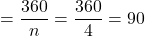 . . |
| 16 | D — |
De Moivre’s / roots | Cube roots of  : :  , ,  , ,  . is not one of them. . is not one of them. |
| 17 | A — |
De Moivre’s / powers |  , ,  . .  . . |
| 18 | C — |
AC Circuits / impedance |  . Recognize the 6-8-10 triple. . Recognize the 6-8-10 triple. |
| 19 | A —  lagging lagging |
AC Circuits / phase angle |  . Positive . Positive  means inductive means lagging. means inductive means lagging. |
| 20 | A — A |
AC Circuits / Ohm’s law |  . . |
| 21 | B — |
AC Circuits / phasors | Drop  and and  . Keep amplitude . Keep amplitude  and phase angle and phase angle  . . |
| 22 | B — lagging |
AC Circuits / power factor |  VA. VA.  . Positive means inductive means lagging. . Positive means inductive means lagging. |
| 23 | D — |
AC Circuits / parallel impedance |  . .  . .  . . |
| 24 | A — VAR |
AC Circuits / complex power |  VA. VA.  VAR. VAR. |
| 25 | A — A |
Combined — De Moivre’s + AC Circuits |  , ,  , ,  . .  A. A. |
Score Interpretation
| Score | Interpretation | Recommended Action |
|---|---|---|
| 23 to 25 | Excellent — board exam ready on this topic | Review any items you got wrong. Move to the next topic. |
| 20 to 22 | Good — above passing threshold | Study full solutions for items you missed. Retake in 3 days. |
| 16 to 19 | Satisfactory — needs reinforcement | Read the series posts for your weakest topic. Retake the exam. |
| 11 to 15 | Needs significant review | Work through all four parts from Part 1. Focus on worked examples. |
| 10 and below | Foundational gaps present | Start from Part 1. Work every practice problem before moving to the next part. |
Frequently Asked Questions
Q1. Which part of this series should I study first if I have only one day before the board exam?
Start with the formula sheet on this page. Screenshot it and study it for 30 minutes. Then go to Part 1 and read only the Board Exam Quick Tips section and the powers of shortcut. Then read the Quick Tips from Part 2 focusing on the form selection rule. If you are taking the ECE or EE board exam, also read the Quick Tips from Part 4. With one day remaining, targeted review of high-yield rules is more effective than reading full post content from beginning to end.
Q2. Is De Moivre’s theorem really tested on the board exam or is it a minor topic?
It is tested. ECE board exams from multiple years have included problems asking for all cube roots or fourth roots of a complex number. The most common trap is writing only the principal root and missing the other  roots. See Part 3 for the complete nth root formula and worked examples of the most common question types.
Q3. Do I need to memorize Euler’s formula or will it be given during the exam?
Memorize it.  is not consistently provided in the reference data during Philippine engineering board exams. It is treated as required knowledge in the same category as the quadratic formula or the Pythagorean theorem. It appears in exponential form conversions, phasor derivations, Laplace transform problems, and Fourier series questions.
Q4. How is complex number mathematics connected to AC circuit analysis?
Impedance  is a complex number in rectangular form. The impedance triangle is the Argand diagram. The modulus formula
  is the Pythagorean theorem. The phase angle
  is the argument formula. Ohm’s law in phasor form
  is complex multiplication. Every computation you learned in Parts 1 through 3 reappears in AC circuit problems. This is why Part 4 is the most important post in the series for ECE and EE examinees.
Q5. What is the next series after Complex Numbers on PinoyBIX?
The next series covers Matrices and Determinants — another high-frequency topic in Engineering Mathematics for all engineering boards. It follows the same structure: four posts covering theory, operations, applications, and a combined practice exam with full solutions. Follow the PinoyBIX Facebook page to get notified when it goes live.
What is Next — Matrices and Determinants
The next series in the PinoyBIX Engineering Mathematics Board Exam Reviewer covers Matrices and Determinants. This topic appears on every engineering board exam in the Philippines and connects directly to systems of equations, Cramer’s rule, eigenvalue problems, and structural analysis in CE and ME subjects.
The series will follow the same four-part structure with the same formula sheets, worked problems, common mistakes tables, and practice exams that you found in this series.
Follow PinoyBIX on Facebook to get notified when the Matrices and Determinants series goes live.
Published by PinoyBIX.org — Engineering Education for Every Filipino Student. Electronics · Mathematics · Board Exam Review · Free for Everyone.
Related Content



P inoyBIX educates thousands of reviewers and students a day in preparation for their board examinations. Also provides professionals with materials for their lectures and practice exams. Help me go forward with the same spirit.
“Will you subscribe today via YOUTUBE?”
TIRED OF ADS?
- Become Premium Member and experienced complete ads-free content browsing.
- Full Content Access to Premium Solutions Exclusive for Premium members
- Access to PINOYBIX FREEBIES folder
- Download Reviewers and Learning Materials Free
- Download Content: You can see download/print button at the bottom of each post.
PINOYBIX FREEBIES FOR PREMIUM MEMBERSHIP:
- CIVIL ENGINEERING REVIEWER
- CIVIL SERVICE EXAM REVIEWER
- CRIMINOLOGY REVIEWER
- ELECTRONICS ENGINEERING REVIEWER (ECE/ECT)
- ELECTRICAL ENGINEERING & RME REVIEWER
- FIRE OFFICER EXAMINATION REVIEWER
- LET REVIEWER
- MASTER PLUMBER REVIEWER
- MECHANICAL ENGINEERING REVIEWER
- NAPOLCOM REVIEWER
- Additional upload reviewers and learning materials are also FREE
FOR A LIMITED TIME
If you subscribe for PREMIUM today!
You will receive an additional 1 month of Premium Membership FREE.
For Bronze Membership an additional 2 months of Premium Membership FREE.
For Silver Membership an additional 3 months of Premium Membership FREE.
For Gold Membership an additional 5 months of Premium Membership FREE.
Join the PinoyBIX community.