
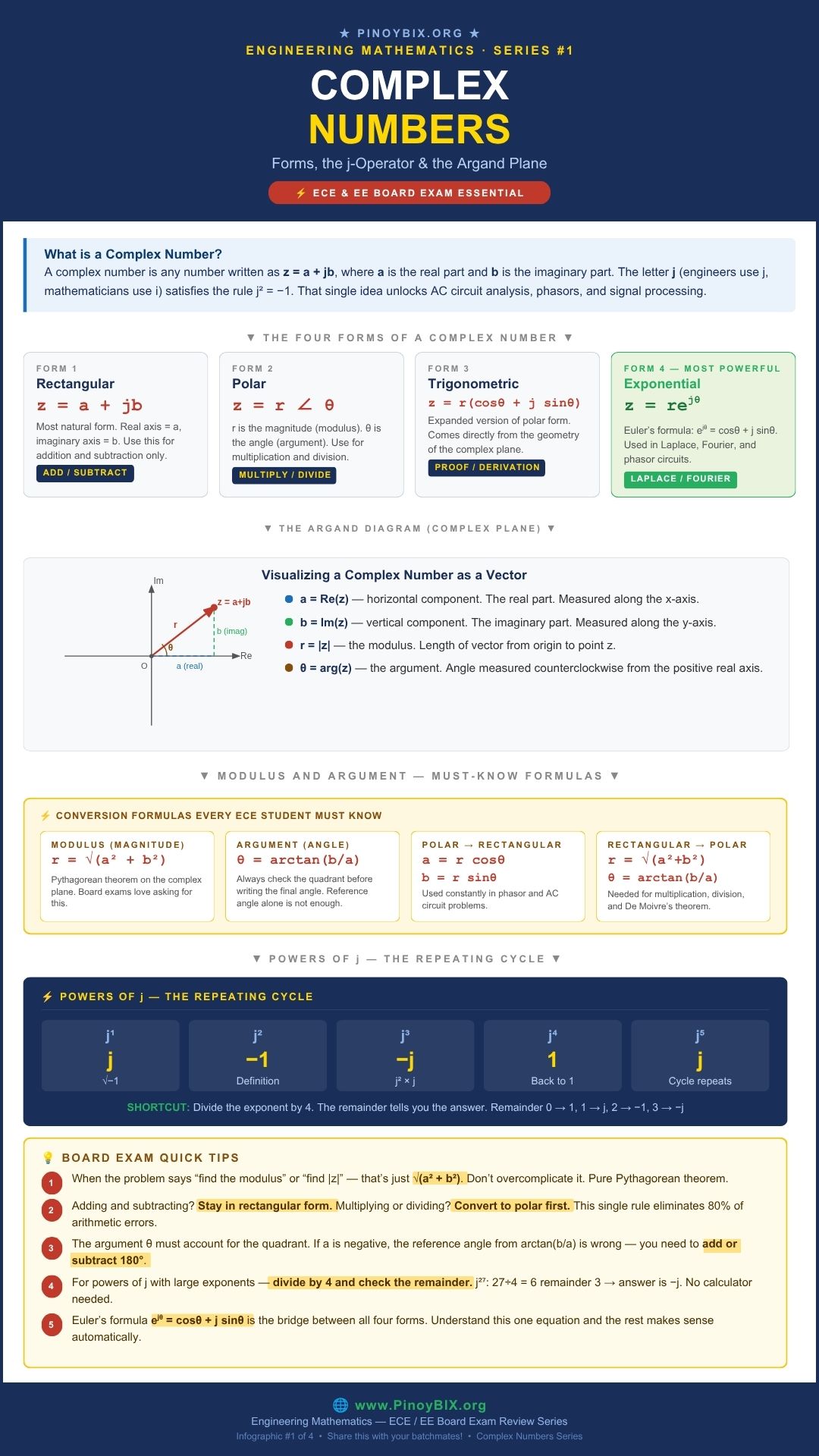
Most engineering students meet complex numbers in second year and treat it as a pure math topic. Then third year arrives. AC circuits show up. Suddenly  is everywhere and the connection between the algebra and the engineering becomes impossible to ignore. That connection is exactly what this post builds from the ground up.
This is Part 1 of the Complete Complex Numbers ECE and EE Board Exam Reviewer Series on PinoyBIX.org. We start with the foundation: what a complex number actually is, the four forms you need to know, the  -operator rules, and the Argand diagram that makes all of it visual. If you are reviewing for any engineering board exam in the Philippines or currently enrolled in Engineering Mathematics, save this page.
- ECE (Electronics Engineer) — Complex numbers appear in Engineering Mathematics and Electronics subjects. Expect 5 to 10 items covering all four forms, operations, De Moivre’s theorem, and AC circuit applications. This is a high-frequency topic.
- EE (Electrical Engineer) — Heavily tested in Engineering Mathematics and Electrical Circuits subjects. Phasor analysis and impedance problems are direct applications. High-frequency topic.
- ME (Mechanical Engineer) — Appears in Engineering Mathematics. Tested at moderate frequency. Focus is on operations and De Moivre’s theorem.
- CE (Civil Engineer) — Appears in Engineering Mathematics. Moderate frequency. Emphasis on algebraic operations and polar-rectangular conversions.
- ChE (Chemical Engineer) — Appears in Engineering Mathematics. Moderate frequency. Complex numbers appear in process control and transfer function topics.
- GeE (Geodetic Engineer) — Appears in Engineering Mathematics. Low to moderate frequency. Basic operations and conversions are the main focus.
- MetE (Metallurgical Engineer) — Appears in Engineering Mathematics. Low frequency. Basic forms and operations only.
- MinE (Mining Engineer) — Appears in Engineering Mathematics. Low frequency. Basic operations and conversions.
- Naval Architect and Marine Engineer — Appears in Engineering Mathematics. Moderate frequency. Applications in vibration analysis and signal processing.
Bottom line: ECE and EE examinees must master every section of this post. ME, CE, and ChE examinees must master the forms, operations, and De Moivre’s theorem. All other boards need solid command of the basics.
What is a Complex Number?
A complex number is any number of the form:
![\[z = a + jb\]](https://pinoybix.org/wp-content/ql-cache/quicklatex.com-5fa4ff1864c9c50b107537c85c3181ec_l3.png "Rendered by QuickLaTeX.com")
where  is the real part and
  is the imaginary part.
In engineering, we use instead of  to avoid confusion with instantaneous current in circuit equations. Mathematicians use . Engineers use . On the Philippine engineering board exam, always write .
The entire foundation of complex numbers rests on one definition:
![\[j = \sqrt{-1} \qquad \therefore \quad j^2 = -1\]](https://pinoybix.org/wp-content/ql-cache/quicklatex.com-b8dcb5ace0622f22ba7fa717d5220282_l3.png "Rendered by QuickLaTeX.com")
That is it. One equation. Everything else — the four forms, De Moivre’s theorem, phasor analysis, impedance — follows from that single statement.
One more thing to fix before moving forward. Students consistently write  on the board exam. That is wrong. The imaginary part is the coefficient
  alone, not
  . This distinction costs marks on theory questions.
![\[\text{Re}(z) = a \qquad \text{Im}(z) = b\]](https://pinoybix.org/wp-content/ql-cache/quicklatex.com-c7158cf72db8eaee84fc3f6ae96e93da_l3.png "Rendered by QuickLaTeX.com")
The Four Forms of a Complex Number
This is where most textbooks fail students. They present all four forms in one chapter without telling you which form to use and when. Use the wrong form for the wrong operation and your solution falls apart even if your arithmetic is perfect.
Form 1 — Rectangular Form
Use for: Addition and subtraction only.
This is the most natural form. You plot it on the complex plane the same way you plot a point  on the Cartesian plane. The rule is simple: stay in rectangular form when you add or subtract. Never add two complex numbers while they are in polar form.
Form 2 — Polar Form
![\[z = r\angle\theta\]](https://pinoybix.org/wp-content/ql-cache/quicklatex.com-a7be6aa7d7486d49cec9f7c3d1c9e2f4_l3.png "Rendered by QuickLaTeX.com")
where  is the modulus and
 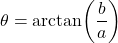 is the argument.
Use for: Multiplication and division only.
When you multiply two complex numbers in polar form, multiply the magnitudes and add the angles. When you divide, divide the magnitudes and subtract the angles.
![\[z_1 \times z_2 = r_1 r_2 \angle(\theta_1 + \theta_2)\]](https://pinoybix.org/wp-content/ql-cache/quicklatex.com-5b166373cf53fc9a51be1f9b0db18fe7_l3.png "Rendered by QuickLaTeX.com")
![\[\dfrac{z_1}{z_2} = \dfrac{r_1}{r_2} \angle(\theta_1 - \theta_2)\]](https://pinoybix.org/wp-content/ql-cache/quicklatex.com-86371da61ddfebfed6b2eecd03978c25_l3.png "Rendered by QuickLaTeX.com")
Two lines. That is the entire rule for polar multiplication and division. Memorize it exactly as written.
Form 3 — Trigonometric Form
![\[z = r(\cos\theta + j\sin\theta)\]](https://pinoybix.org/wp-content/ql-cache/quicklatex.com-55344b22c30e4bf9a0d9c0b4db6889bd_l3.png "Rendered by QuickLaTeX.com")
Use for: Proofs, derivations, and expansion into real and imaginary components.
This is the expanded version of polar form. It comes directly from the geometry of the Argand diagram. On the board exam you will see this as an intermediate step in De Moivre’s theorem problems and Euler’s formula derivations.
Form 4 — Exponential Form
![\[z = re^{j\theta}\]](https://pinoybix.org/wp-content/ql-cache/quicklatex.com-0e7185ab4215474ce9a5383249bc12b4_l3.png "Rendered by QuickLaTeX.com")
![\[e^{j\theta} = \cos\theta + j\sin\theta\]](https://pinoybix.org/wp-content/ql-cache/quicklatex.com-943a1817fe657a0387db0603588e77ef_l3.png "Rendered by QuickLaTeX.com")
Use for: Laplace transforms, Fourier analysis, phasor circuits, and signal processing.
This is the most powerful form. Euler’s formula is the bridge between trigonometric and exponential representations. If you understand only one equation from this entire series, make it  . It appears everywhere in upper-level engineering subjects.
The Argand Diagram
The Argand diagram, also called the complex plane, is a coordinate system where the horizontal axis represents the real part and the vertical axis represents the imaginary part. A complex number  is plotted as the point and represented as a vector from the origin to that point.
Two quantities come directly from the geometry of this diagram.
![\[|z| = r = \sqrt{a^2 + b^2} \qquad \text{(modulus — length of the vector)}\]](https://pinoybix.org/wp-content/ql-cache/quicklatex.com-c25ae0d52a0ec7904a48dba6b509a86f_l3.png "Rendered by QuickLaTeX.com")
![\[\theta = \arctan\!\left(\dfrac{b}{a}\right) \qquad \text{(argument — angle from positive real axis)}\]](https://pinoybix.org/wp-content/ql-cache/quicklatex.com-8ead53e73f17d75516642e0e386d9bd3_l3.png "Rendered by QuickLaTeX.com")
The modulus formula is the Pythagorean theorem applied to the complex plane. Students overcomplicate this on the board exam. It is always  .
.
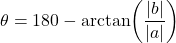
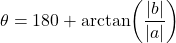
The argument formula requires a quadrant check. The formula  gives you the reference angle only. You must adjust for the correct quadrant.
| Quadrant | Sign of  |
Sign of |
Correct Argument  |
|---|---|---|---|
| I |  |
|
|
| II |  |
|
 |
| III | |
|
 |
| IV | |
|
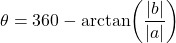 |
Skip the quadrant check and you will get the angle wrong. This is one of the most consistent error patterns on the board exam.
Conversion Between Forms
You will convert between rectangular and polar forms constantly. These formulas are non-negotiable.
Rectangular to Polar:
![\[r = \sqrt{a^2 + b^2} \qquad \theta = \arctan\!\left(\dfrac{b}{a}\right) \quad \text{(adjust for quadrant)}\]](https://pinoybix.org/wp-content/ql-cache/quicklatex.com-f77c47799b24e22f96b21d331c50d8e8_l3.png "Rendered by QuickLaTeX.com")
Polar to Rectangular:
![\[a = r\cos\theta \qquad b = r\sin\theta\]](https://pinoybix.org/wp-content/ql-cache/quicklatex.com-492383e5ae3e9f52a0b59d70d48e918f_l3.png "Rendered by QuickLaTeX.com")
Powers of j — The Repeating Cycle
The powers of repeat in a cycle of four. This appears on the board exam regularly and can be solved in seconds once you know the shortcut.
![\[j^1 = j \qquad j^2 = -1 \qquad j^3 = -j \qquad j^4 = 1\]](https://pinoybix.org/wp-content/ql-cache/quicklatex.com-e2900eb538dd8ae430e6a23f777619d8_l3.png "Rendered by QuickLaTeX.com")
Shortcut: Divide the exponent by 4. The remainder determines the value.
![\[\text{Remainder } 0 \rightarrow 1 \qquad \text{Remainder } 1 \rightarrow j \qquad \text{Remainder } 2 \rightarrow -1 \qquad \text{Remainder } 3 \rightarrow -j\]](https://pinoybix.org/wp-content/ql-cache/quicklatex.com-b0dbad6832cfe2887f4d3850cc15cce4_l3.png "Rendered by QuickLaTeX.com")
For example: evaluate  .
.
![\[47 \div 4 = 11 \text{ remainder } 3 \qquad \therefore \quad j^{47} = j^3 = -j\]](https://pinoybix.org/wp-content/ql-cache/quicklatex.com-41224d1325e33cce9f56aa068a0b051b_l3.png "Rendered by QuickLaTeX.com")
No calculator needed. Ten seconds maximum.
Worked Problems — Board Exam Type Questions
The following 10 problems are representative of actual ECE, EE, ME, CE, and ChE board exam questions on complex numbers. Work each problem by hand before reading the solution.
Problem 1 — ECE Board Exam Type
Simplify  and express the result.
Given:
Find: The simplified value.
Solution:
Step 1: Divide the exponent by 4.
![\[35 \div 4 = 8 \text{ remainder } 3\]](https://pinoybix.org/wp-content/ql-cache/quicklatex.com-acf10ea8d72be8717037146329693a98_l3.png "Rendered by QuickLaTeX.com")
Step 2: Apply the remainder rule.
![\[\text{Remainder } 3 \rightarrow j^3 = -j\]](https://pinoybix.org/wp-content/ql-cache/quicklatex.com-fda50d9dc86415716bb9c0a689edd32d_l3.png "Rendered by QuickLaTeX.com")
Step 3: Write the final answer.
![\[j^{35} = -j\]](https://pinoybix.org/wp-content/ql-cache/quicklatex.com-cd762d5823381fde1d8a8ab1c47e1ab5_l3.png "Rendered by QuickLaTeX.com")

Examiner note: Some choices on the board exam include ,  ,
,  , and
, and  . Students who do not know the shortcut attempt to expand step by step and run out of time or make an arithmetic error. Use the remainder method every time.
Problem 2 — ECE Board Exam Type
Express  in polar form.
Given:
Find:  and , then write
  in polar form.
Solution:
Step 1: Compute the modulus.
![\[r = \sqrt{a^2 + b^2} = \sqrt{3^2 + 4^2} = \sqrt{9 + 16} = \sqrt{25} = 5\]](https://pinoybix.org/wp-content/ql-cache/quicklatex.com-57a89b0fba77e9800b83f7a1a4eded0b_l3.png "Rendered by QuickLaTeX.com")
Step 2: Compute the argument. Since  and
and  , the number is in Quadrant I. No adjustment needed.
![\[\theta = \arctan\!\left(\dfrac{4}{3}\right) = \arctan(1.333) = 53.13°\]](https://pinoybix.org/wp-content/ql-cache/quicklatex.com-e18a3bd738e98879312bba31a8750c0b_l3.png "Rendered by QuickLaTeX.com")
Step 3: Write the polar form.
![\[z = 5\angle 53.13°\]](https://pinoybix.org/wp-content/ql-cache/quicklatex.com-9bbbf4be6bfcf0d0ece9fd6330f6eddd_l3.png "Rendered by QuickLaTeX.com")

Examiner note: The 3-4-5 right triangle is the most frequently used example on the board exam. Recognize it immediately.  and
and  without a calculator.
Problem 3 — ECE Board Exam Type
Convert  to rectangular form.
Given:
Find:  form.
form.
Solution:
Step 1: Compute the real part.
![\[a = r\cos\theta = 10\cos(143.13°) = 10(-0.8) = -8\]](https://pinoybix.org/wp-content/ql-cache/quicklatex.com-d418a1f0857237bd48952155ce856ad2_l3.png "Rendered by QuickLaTeX.com")
Step 2: Compute the imaginary part.
![\[b = r\sin\theta = 10\sin(143.13°) = 10(0.6) = 6\]](https://pinoybix.org/wp-content/ql-cache/quicklatex.com-c7505ef8dd7b3fd4586eccc36fe62311_l3.png "Rendered by QuickLaTeX.com")
Step 3: Write the rectangular form.
![\[z = -8 + j6\]](https://pinoybix.org/wp-content/ql-cache/quicklatex.com-b9634e61007b66e953795bf4ba7a7d2e_l3.png "Rendered by QuickLaTeX.com")

Examiner note:  is in Quadrant II. Cosine is negative in Quadrant II, so the real part must be negative. If you get a positive real part for an angle between
  and
and  , you made a sign error.
Problem 4 — EE Board Exam Type
Find the modulus and argument of  .
.
Given:
Find:  and
and  .
.
Solution:
Step 1: Compute the modulus.
![\[|z| = \sqrt{(-5)^2 + (-12)^2} = \sqrt{25 + 144} = \sqrt{169} = 13\]](https://pinoybix.org/wp-content/ql-cache/quicklatex.com-58c1c3102fbbf4ed39230b695a235548_l3.png "Rendered by QuickLaTeX.com")
Step 2: Find the reference angle.
![\[\theta_{ref} = \arctan\!\left(\dfrac{12}{5}\right) = \arctan(2.4) = 67.38°\]](https://pinoybix.org/wp-content/ql-cache/quicklatex.com-2125eaa2a4a2c47876d0819c6c2e8b1e_l3.png "Rendered by QuickLaTeX.com")
Step 3: Adjust for the correct quadrant. Since  and
and  , the number is in Quadrant III.
![\[\theta = 180° + 67.38° = 247.38°\]](https://pinoybix.org/wp-content/ql-cache/quicklatex.com-340f69c72f2c4acb4287dabd67095f0c_l3.png "Rendered by QuickLaTeX.com")
Step 4: Write the polar form.
![\[z = 13\angle 247.38°\]](https://pinoybix.org/wp-content/ql-cache/quicklatex.com-d9cce2f62e48abb5f7ab5c04eeb15e06_l3.png "Rendered by QuickLaTeX.com")
 ,
, 
Examiner note: The 5-12-13 Pythagorean triple is the second most common example on the board exam after 3-4-5. Recognize it on sight. Also note that some answer choices express Quadrant III angles as negative:  . Both are correct.
Problem 5 — ME Board Exam Type
Evaluate  .
.
Given:  and
and 
Find: 
Solution:
Step 1: Add the real parts.
![\[a = 2 + 4 = 6\]](https://pinoybix.org/wp-content/ql-cache/quicklatex.com-1713afadfe12b00f8ddb00729f71ad26_l3.png "Rendered by QuickLaTeX.com")
Step 2: Add the imaginary parts.
![\[b = 3 + (-1) = 2\]](https://pinoybix.org/wp-content/ql-cache/quicklatex.com-c9811339ba9006a179058a0b05f4f78c_l3.png "Rendered by QuickLaTeX.com")
Step 3: Write the result.
![\[z_1 + z_2 = 6 + j2\]](https://pinoybix.org/wp-content/ql-cache/quicklatex.com-7b87da975d7b874b90574e2bb249b86b_l3.png "Rendered by QuickLaTeX.com")

Examiner note: Addition is always done in rectangular form. Never attempt to add two complex numbers that are in polar form directly.
Problem 6 — CE Board Exam Type
If  , write in rectangular and exponential forms.
Given:
Find: Rectangular form and exponential form  .
.
Solution:
Step 1: Extract and from trigonometric form. Here  and
and  .
.
Step 2: Convert to rectangular form.
![\[a = 6\cos 30° = 6\left(\dfrac{\sqrt{3}}{2}\right) = 3\sqrt{3} \approx 5.196\]](https://pinoybix.org/wp-content/ql-cache/quicklatex.com-08a7b2dbd7bf31e4330b21b6e7c97910_l3.png "Rendered by QuickLaTeX.com")
![\[b = 6\sin 30° = 6\left(\dfrac{1}{2}\right) = 3\]](https://pinoybix.org/wp-content/ql-cache/quicklatex.com-9b54f1070e0530a196dac05d7856f4b0_l3.png "Rendered by QuickLaTeX.com")
![\[z = 3\sqrt{3} + j3 \approx 5.196 + j3\]](https://pinoybix.org/wp-content/ql-cache/quicklatex.com-69f0aef0f9366f2d3d5b0cf4168a8f95_l3.png "Rendered by QuickLaTeX.com")
Step 3: Convert to exponential form. Convert to radians.
![\[30° = \dfrac{\pi}{6} \text{ radians}\]](https://pinoybix.org/wp-content/ql-cache/quicklatex.com-681e320a1871e4ceec1929e3e7ecf976_l3.png "Rendered by QuickLaTeX.com")
![\[z = 6e^{j\pi/6}\]](https://pinoybix.org/wp-content/ql-cache/quicklatex.com-ce1b527d10d2e9b7dc656fce9dd799f2_l3.png "Rendered by QuickLaTeX.com")
 (rectangular) and
  (exponential)
Examiner note: The board exam sometimes asks you to convert from trigonometric form directly to exponential form. The modulus stays the same. You only need to convert the angle from degrees to radians for the exponential form.
Problem 7 — ChE Board Exam Type
Find the conjugate of  and compute
  .
.
Given:
Find:  and
and
Solution:
Step 1: Write the conjugate by flipping the sign of the imaginary part.
![\[z^* = 7 + j5\]](https://pinoybix.org/wp-content/ql-cache/quicklatex.com-8cdac2c6e14fdd9fcf95e0fd0725f3bd_l3.png "Rendered by QuickLaTeX.com")
Step 2: Multiply by .
![\[z \cdot z^* = (7 - j5)(7 + j5)\]](https://pinoybix.org/wp-content/ql-cache/quicklatex.com-cc6313fd5c08570ffce9be7a2dceb7e5_l3.png "Rendered by QuickLaTeX.com")
Step 3: Apply the difference of squares pattern  .
.
![\[z \cdot z^* = 7^2 + 5^2 = 49 + 25 = 74\]](https://pinoybix.org/wp-content/ql-cache/quicklatex.com-f534930cb26747c75ef997f7b86d8620_l3.png "Rendered by QuickLaTeX.com")
Step 4: Verify using the modulus.  . This confirms
  , which is always a real number.
 and
and 
Examiner note: The product of a complex number and its conjugate always gives a real number equal to  . This property is the foundation of the conjugate rationalization method used in division problems.
Problem 8 — ECE Board Exam Type
If and  , find
  in rectangular form.
Given: ,
Find: in the form
Solution:
Step 1: Multiply numerator and denominator by the conjugate of the denominator.
![\[\dfrac{z_1}{z_2} = \dfrac{(2 + j3)}{(1 - j2)} \cdot \dfrac{(1 + j2)}{(1 + j2)}\]](https://pinoybix.org/wp-content/ql-cache/quicklatex.com-aad1401e3f93e0d9ea6663fc52a5ef59_l3.png "Rendered by QuickLaTeX.com")
Step 2: Expand the numerator.
![\[(2 + j3)(1 + j2) = 2 + j4 + j3 + j^2 6 = 2 + j7 + (-1)(6) = 2 - 6 + j7 = -4 + j7\]](https://pinoybix.org/wp-content/ql-cache/quicklatex.com-47f166d137ee879d08c6c1382113f3bc_l3.png "Rendered by QuickLaTeX.com")
Step 3: Expand the denominator using  .
.
![\[(1)^2 + (2)^2 = 1 + 4 = 5\]](https://pinoybix.org/wp-content/ql-cache/quicklatex.com-46cd5f56cf8cc6ad6ff1308d2d8fb94f_l3.png "Rendered by QuickLaTeX.com")
Step 4: Divide each part of the numerator by the denominator.
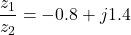
![\[\dfrac{z_1}{z_2} = \dfrac{-4 + j7}{5} = -\dfrac{4}{5} + j\dfrac{7}{5} = -0.8 + j1.4\]](https://pinoybix.org/wp-content/ql-cache/quicklatex.com-82745f5098d2fa958637f65525714d92_l3.png "Rendered by QuickLaTeX.com")
Examiner note: The conjugate rationalization method eliminates from the denominator. The denominator always becomes , which is a real number. Never leave in the denominator of a final answer.
Problem 9 — EE Board Exam Type
Express  in rectangular form.
Given:
Find: Rectangular form
Solution:
Step 1: Apply Euler’s formula with  .
.
![\[z = \cos\!\left(\dfrac{2\pi}{3}\right) + j\sin\!\left(\dfrac{2\pi}{3}\right)\]](https://pinoybix.org/wp-content/ql-cache/quicklatex.com-c2bee44f1b3f7a30ae977898c19da385_l3.png "Rendered by QuickLaTeX.com")
Step 2: Convert  radians to degrees for easier evaluation.
![\[\dfrac{2\pi}{3} \text{ rad} = 120°\]](https://pinoybix.org/wp-content/ql-cache/quicklatex.com-2593450de0cb2755c1cc5ed8308c9695_l3.png "Rendered by QuickLaTeX.com")
Step 3: Evaluate the trigonometric functions.
![\[\cos 120° = -\dfrac{1}{2} = -0.5 \qquad \sin 120° = \dfrac{\sqrt{3}}{2} \approx 0.866\]](https://pinoybix.org/wp-content/ql-cache/quicklatex.com-98292c9faa15a2d2e6989bf59d5b30ff_l3.png "Rendered by QuickLaTeX.com")
Step 4: Write the rectangular form.
![\[z = -0.5 + j0.866\]](https://pinoybix.org/wp-content/ql-cache/quicklatex.com-2316b2eed4ff115105d382689a62f5ac_l3.png "Rendered by QuickLaTeX.com")

Examiner note: When Euler’s formula problems give the angle in radians, convert to degrees first if that makes the trigonometric evaluation easier. The result is the same either way.  is a standard angle — no calculator needed.
Problem 10 — ECE Board Exam Type
Evaluate  where
where  is any positive integer.
Given: where 
Find: The simplified value for all valid .
Solution:
Step 1: Split the exponent using the laws of exponents.
![\[j^{4n+3} = j^{4n} \cdot j^3\]](https://pinoybix.org/wp-content/ql-cache/quicklatex.com-186c4cbfb70f8307df03bd7e04aa3577_l3.png "Rendered by QuickLaTeX.com")
Step 2: Evaluate  . Since the cycle of repeats every 4 powers,
  , and therefore
  .
.
![\[j^{4n} = 1\]](https://pinoybix.org/wp-content/ql-cache/quicklatex.com-debabd7006add75328b4bb1505d8c4b4_l3.png "Rendered by QuickLaTeX.com")
Step 3: Evaluate  .
.
![\[j^3 = -j\]](https://pinoybix.org/wp-content/ql-cache/quicklatex.com-3da1e57e93f9c2d15cc2f454b2569fa3_l3.png "Rendered by QuickLaTeX.com")
Step 4: Combine the results.
![\[j^{4n+3} = 1 \cdot (-j) = -j\]](https://pinoybix.org/wp-content/ql-cache/quicklatex.com-3a7f44c01a702fa053ba44b23316c4dd_l3.png "Rendered by QuickLaTeX.com")
 for all positive integers
Examiner note: This is a generalized form question that tests conceptual understanding rather than pure computation. The board exam uses this to separate students who truly understand the cycle from those who only memorized specific values. The key insight is that  always, so only the remainder exponent matters.
Common Mistakes and Examiner Traps
These are the most consistent error patterns observed in ECE and EE board exam solutions. Read each one carefully.
| ❌ Common Mistake | ✅ Correct Approach |
|---|---|
| Writing . Students include in the imaginary part when extracting components. |
The imaginary part is alone.  , not . The is the operator, not part of the value. , not . The is the operator, not part of the value. |
Adding complex numbers in polar form. Attempting  directly without converting to rectangular first. directly without converting to rectangular first. |
Convert both numbers to rectangular form first. Add the real parts together and the imaginary parts together. Then convert back to polar if needed. |
| Using as the final argument without checking the quadrant. The calculator returns the reference angle. Students write it as the answer without verifying. |
Always sketch the complex number on the Argand diagram first — even a quick mental sketch. Check which quadrant it falls in and apply the correct adjustment from the quadrant table. |
Expanding or step by step. Students multiply  repeatedly and either run out of time or make an arithmetic error mid-sequence. repeatedly and either run out of time or make an arithmetic error mid-sequence. |
Divide the exponent by 4 and use the remainder. The answer comes in under 10 seconds. This is non-negotiable on the board exam where time is the limiting factor. |
Leaving in the denominator of a rectangular form answer. Writing  or or  as a final answer. as a final answer. |
Always rationalize using the conjugate of the denominator. Multiply numerator and denominator by  to clear from the bottom. The denominator becomes the real number . to clear from the bottom. The denominator becomes the real number . |
Confusing modulus with the imaginary part. Some students write  or or  when asked for the magnitude. when asked for the magnitude. |
The modulus is always  . It is always a non-negative real number. It is never equal to or . . It is always a non-negative real number. It is never equal to or . |
Using degrees instead of radians (or vice versa) in Euler’s formula. Writing  when the correct form is when the correct form is  . . |
Euler’s formula requires the angle in radians. Convert degrees to radians before substituting into  . Use . Use 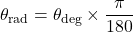 . . |
Board Exam Quick Tips
- The form you choose determines whether your solution takes 30 seconds or 5 minutes. Rectangular for addition and subtraction. Polar for multiplication and division. Know this rule before you enter the examination room.
 , not
, not  . The imaginary part is the coefficient alone. This distinction appears in multiple choice theory questions and in problems asking you to identify components of a complex expression.
- Always verify the quadrant after computing
 . Your calculator returns the reference angle. It does not know which quadrant you are in. Adjust manually using the quadrant table every single time.
 - Euler’s formula
 is a required memory item. It is not always provided in the given data on the board exam. It appears in exponential form conversions, Laplace transform problems, phasor derivations, and Fourier series questions.
 - The
 -power shortcut eliminates a category of board exam mistakes entirely. Divide the exponent by 4. Use the remainder. Write the answer. It takes 10 seconds and it is always correct.
Frequently Asked Questions
Q1. Why do engineers use instead of for the imaginary unit?
In electrical engineering, the letter is reserved for instantaneous current. Using for  in the same equation creates ambiguity — you cannot tell whether refers to current or the imaginary unit. Engineers adopted to eliminate that confusion. It is the same mathematical object with a different symbol. On all Philippine engineering board exams, use .
Q2. What is the difference between polar form and trigonometric form?
They represent the same complex number in two different notations. Polar form  is the shorthand. Trigonometric form
  is the expanded version that shows the actual real and imaginary components. Polar form is faster to write and use in calculations. Trigonometric form is more useful for derivations and for connecting to Euler’s formula.
Q3. Can the modulus ever be negative?
No. The modulus is a distance and distances are always non-negative. It is computed as , which is always zero or positive. If your computation produces a negative modulus, there is an arithmetic error somewhere in your work.
Q4. How do I verify that my argument angle is correct?
Sketch the complex number on the Argand diagram — even a rough mental picture works. Identify which quadrant the point falls in. Your computed argument must correspond to an angle in that quadrant. For Quadrant I, the angle is between  and . For Quadrant II, between and . For Quadrant III, between and
  . For Quadrant IV, between and
  . If your angle does not fall in the correct range, apply the appropriate quadrant correction.
Q5. Is Euler’s formula provided in the board exam or is it a memory item?
Memorize it. is not consistently provided in the reference data during the board exam. It appears in problems on exponential form conversion, phasor analysis, Laplace transforms, and Fourier series. Treat it as required knowledge the same way you treat the quadratic formula or the Pythagorean theorem.
What is Next
Now that the four forms, the Argand diagram, and the -operator rules are locked in, the next step is putting them to work. Part 2 of this series covers all operations on complex numbers — addition, subtraction, multiplication, division, and the conjugate method — with the exact form selection rules, full worked examples, and the most common board exam traps in this topic.
→ Continue to Part 2 — Operations on Complex Numbers: Add, Subtract, Multiply, Divide
→ Back to the Complete Complex Numbers ECE and EE Board Exam Reviewer Series
Published by PinoyBIX.org — Engineering Education for Every Filipino Student. Electronics · Mathematics · Board Exam Review · Free for Everyone.
Related Content



P inoyBIX educates thousands of reviewers and students a day in preparation for their board examinations. Also provides professionals with materials for their lectures and practice exams. Help me go forward with the same spirit.
“Will you subscribe today via YOUTUBE?”
TIRED OF ADS?
- Become Premium Member and experienced complete ads-free content browsing.
- Full Content Access to Premium Solutions Exclusive for Premium members
- Access to PINOYBIX FREEBIES folder
- Download Reviewers and Learning Materials Free
- Download Content: You can see download/print button at the bottom of each post.
PINOYBIX FREEBIES FOR PREMIUM MEMBERSHIP:
- CIVIL ENGINEERING REVIEWER
- CIVIL SERVICE EXAM REVIEWER
- CRIMINOLOGY REVIEWER
- ELECTRONICS ENGINEERING REVIEWER (ECE/ECT)
- ELECTRICAL ENGINEERING & RME REVIEWER
- FIRE OFFICER EXAMINATION REVIEWER
- LET REVIEWER
- MASTER PLUMBER REVIEWER
- MECHANICAL ENGINEERING REVIEWER
- NAPOLCOM REVIEWER
- Additional upload reviewers and learning materials are also FREE
FOR A LIMITED TIME
If you subscribe for PREMIUM today!
You will receive an additional 1 month of Premium Membership FREE.
For Bronze Membership an additional 2 months of Premium Membership FREE.
For Silver Membership an additional 3 months of Premium Membership FREE.
For Gold Membership an additional 5 months of Premium Membership FREE.
Join the PinoyBIX community.