
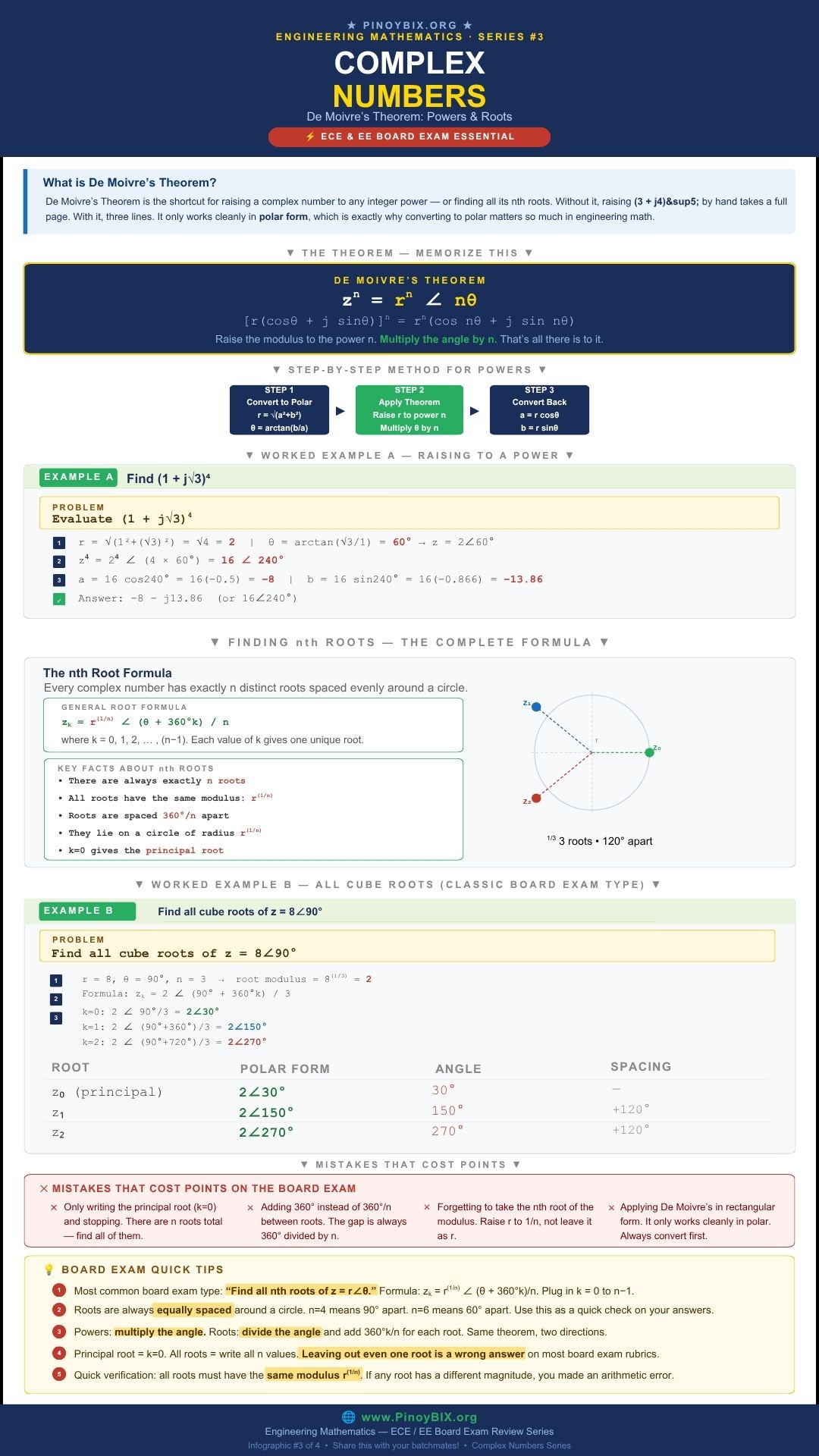
There is one question type in the Engineering Mathematics section of the board exam that consistently produces incomplete answers. Not wrong answers. Incomplete ones. A student finds one root, feels confident, moves on, and leaves the remaining roots sitting on the page uncollected. De Moivre’s theorem is the topic. Finding all nth roots is the trap.
This is Part 3 of the Complete Complex Numbers ECE and EE Board Exam Reviewer Series on PinoyBIX.org. Part 1 covered the four forms. Part 2 covered operations. This part covers De Moivre’s theorem in full — integer powers, all nth roots, the root circle diagram, and every examiner trap associated with this topic.
- ECE (Electronics Engineer) — De Moivre’s theorem appears in Engineering Mathematics. Integer powers and nth roots are both tested. High frequency topic. Expect 3 to 6 items covering powers, cube roots, and fourth roots specifically.
- EE (Electrical Engineer) — Appears in Engineering Mathematics. Powers of complex numbers appear in phasor and AC circuit derivations. High frequency topic.
- ME (Mechanical Engineer) — Appears in Engineering Mathematics. Integer powers are tested regularly. Nth roots appear occasionally. Moderate frequency.
- CE (Civil Engineer) — Appears in Engineering Mathematics. Integer powers and square roots are the most tested. Moderate frequency.
- ChE (Chemical Engineer) — Appears in Engineering Mathematics. Powers of complex numbers appear in transfer function and stability analysis problems. Moderate frequency.
- GeE (Geodetic Engineer) — Appears in Engineering Mathematics. Basic powers and principal roots are tested. Low to moderate frequency.
- MetE and MinE — Appears in Engineering Mathematics. Integer powers only at the basic level. Low frequency.
- Naval Architect and Marine Engineer — Appears in Engineering Mathematics and vibration analysis. Powers and roots both appear. Moderate frequency.
Bottom line: ECE and EE examinees must master both integer powers and all nth roots completely. ME, CE, and ChE examinees must master integer powers and square roots at minimum. All other boards need solid command of the theorem statement and basic power calculations.
What is De Moivre’s Theorem?
De Moivre’s theorem gives you a direct method for raising a complex number to any integer power. Without it, computing  by hand requires five successive multiplications using the FOIL method. With it, the same computation takes three lines.
The theorem works only in polar form. This is the reason the form selection rules from Part 1 matter so much. If you cannot convert between rectangular and polar quickly, De Moivre’s theorem becomes painful to apply.
![\[z^n = \left[r\angle\theta\right]^n = r^n\angle n\theta\]](https://pinoybix.org/wp-content/ql-cache/quicklatex.com-05c1995fbcbc35c34416a30e8928b8c8_l3.png "Rendered by QuickLaTeX.com")
Expanded form:
![\[\left[r(\cos\theta + j\sin\theta)\right]^n = r^n(\cos n\theta + j\sin n\theta)\]](https://pinoybix.org/wp-content/ql-cache/quicklatex.com-17ece05f210dc82555f5bb1b27310a18_l3.png "Rendered by QuickLaTeX.com")
Raise the modulus to the power  . Multiply the angle by . That is the complete theorem.
The value of can be any integer — positive, negative, or zero. For fractional values of , the theorem extends to nth root calculations, which we cover in detail below.
How to Raise a Complex Number to a Power
The procedure has three steps and never changes regardless of the exponent.
- Convert to polar form. Find
 and
and  . Adjust
  for the correct quadrant.
 - Apply the theorem. Raise
 to the power
  . Multiply by . Write the result as
  .
. - Convert back if needed. If the problem asks for rectangular form, use
 and
and  .
.
 and
and  . Adjust
  .
. and
and  .
.How to Find All nth Roots of a Complex Number
Every complex number has exactly distinct nth roots. They all have the same modulus and they are spaced equally around a circle in the complex plane. The spacing between consecutive roots is always  .
.
Most students know how to find the principal root. The board exam asks for all of them.
![\[z_k = r^{1/n}\angle\dfrac{\theta + 360°k}{n} \qquad k = 0,\, 1,\, 2,\, \ldots,\, (n-1)\]](https://pinoybix.org/wp-content/ql-cache/quicklatex.com-97665d596292a5929611446dc6659da3_l3.png "Rendered by QuickLaTeX.com")
where:
 is the modulus of each root (same for all roots)
- is the argument of the original complex number
- runs from to
 , giving exactly roots
  gives the principal root
- Consecutive roots are spaced
 apart
apart
The root circle is a useful visual tool. All roots lie on a circle of radius  centered at the origin. They are equally spaced at angles of from each other. If your computed roots do not show this spacing pattern, something went wrong in the calculation.
Worked Problems — Board Exam Type Questions
The following 10 problems represent actual ECE, EE, ME, CE, and ChE board exam question types on De Moivre’s theorem. Work each problem completely before reading the solution.
Problem 1 — ECE Board Exam Type
Find  using De Moivre’s theorem.
Given:  , exponent
Find: 
Solution:
Step 1: Convert to polar form.
![\[r = \sqrt{1^2 + 1^2} = \sqrt{2}\]](https://pinoybix.org/wp-content/ql-cache/quicklatex.com-b11dc494840d649f3d5a5a366267cd42_l3.png "Rendered by QuickLaTeX.com")
![\[\theta = \arctan\!\left(\dfrac{1}{1}\right) = 45° \quad \text{(Quadrant I)}\]](https://pinoybix.org/wp-content/ql-cache/quicklatex.com-78b5292376656bca4f622ba0b9b413da_l3.png "Rendered by QuickLaTeX.com")
![\[z = \sqrt{2}\angle 45°\]](https://pinoybix.org/wp-content/ql-cache/quicklatex.com-e0f532e5e7b934c142842190f50195da_l3.png "Rendered by QuickLaTeX.com")
Step 2: Apply De Moivre’s theorem.
![\[z^8 = \left(\sqrt{2}\right)^8\angle(8 \times 45°) = 2^4\angle 360° = 16\angle 360°\]](https://pinoybix.org/wp-content/ql-cache/quicklatex.com-a7f7be18615a329843bb0f2479d5620d_l3.png "Rendered by QuickLaTeX.com")
Step 3: Note that  is equivalent to
  .
.
![\[16\angle 360° = 16\angle 0° = 16(\cos 0° + j\sin 0°) = 16(1 + j \cdot 0) = 16\]](https://pinoybix.org/wp-content/ql-cache/quicklatex.com-232f865169c306b9a5dd9570f99dda1c_l3.png "Rendered by QuickLaTeX.com")

Examiner note: An angle of is the same as . The result is a pure real number. This is a known board exam result — . Recognize it on sight.
Problem 2 — ECE Board Exam Type
Find  using De Moivre’s theorem.
Given:  , exponent
Find:  in rectangular form.
Solution:
Step 1: Convert to polar form.
![\[r = \sqrt{1^2 + (\sqrt{3})^2} = \sqrt{1 + 3} = \sqrt{4} = 2\]](https://pinoybix.org/wp-content/ql-cache/quicklatex.com-29d595d4994c99889ead379b925b0553_l3.png "Rendered by QuickLaTeX.com")
![\[\theta = \arctan\!\left(\dfrac{\sqrt{3}}{1}\right) = \arctan(\sqrt{3}) = 60° \quad \text{(Quadrant I)}\]](https://pinoybix.org/wp-content/ql-cache/quicklatex.com-584b7796e869fbfd407fc5a2fd34a133_l3.png "Rendered by QuickLaTeX.com")
![\[z = 2\angle 60°\]](https://pinoybix.org/wp-content/ql-cache/quicklatex.com-177c4831248a2813f00245b31a18b846_l3.png "Rendered by QuickLaTeX.com")
Step 2: Apply De Moivre’s theorem.
![\[z^4 = 2^4\angle(4 \times 60°) = 16\angle 240°\]](https://pinoybix.org/wp-content/ql-cache/quicklatex.com-d1573620931dcd29cb0d5aac666132f5_l3.png "Rendered by QuickLaTeX.com")
Step 3: Convert to rectangular form.
![\[a = 16\cos 240° = 16\!\left(-\dfrac{1}{2}\right) = -8\]](https://pinoybix.org/wp-content/ql-cache/quicklatex.com-f2de7003bb266a0a472b406cb1ab02c8_l3.png "Rendered by QuickLaTeX.com")
![\[b = 16\sin 240° = 16\!\left(-\dfrac{\sqrt{3}}{2}\right) = -8\sqrt{3} \approx -13.86\]](https://pinoybix.org/wp-content/ql-cache/quicklatex.com-163becbc506865148972a6766d20b719_l3.png "Rendered by QuickLaTeX.com")

Examiner note:  is in Quadrant III. Both cosine and sine are negative in Quadrant III, so both the real and imaginary parts of the result are negative. If you get a positive component for an angle in Quadrant III, check your trigonometric evaluation.
Problem 3 — EE Board Exam Type
Compute  .
.
Given:  , exponent
Find: 
Solution:
Step 1: Convert to polar form.
![\[r = \sqrt{(\sqrt{3})^2 + 1^2} = \sqrt{3 + 1} = 2\]](https://pinoybix.org/wp-content/ql-cache/quicklatex.com-5cd70f378235163b5bea6870cb26fd33_l3.png "Rendered by QuickLaTeX.com")
![\[\theta = \arctan\!\left(\dfrac{1}{\sqrt{3}}\right) = 30° \quad \text{(Quadrant I)}\]](https://pinoybix.org/wp-content/ql-cache/quicklatex.com-e18f059e799864c2b3e22b5f5b67e5bb_l3.png "Rendered by QuickLaTeX.com")
![\[z = 2\angle 30°\]](https://pinoybix.org/wp-content/ql-cache/quicklatex.com-fde2e173281761282c7101ad3c130641_l3.png "Rendered by QuickLaTeX.com")
Step 2: Apply De Moivre’s theorem.
![\[z^6 = 2^6\angle(6 \times 30°) = 64\angle 180°\]](https://pinoybix.org/wp-content/ql-cache/quicklatex.com-5020c3de0a557ddcc804ffd6eab960b3_l3.png "Rendered by QuickLaTeX.com")
Step 3: Convert to rectangular form.
![\[a = 64\cos 180° = 64(-1) = -64\]](https://pinoybix.org/wp-content/ql-cache/quicklatex.com-00c5ad4de2600b7ff53a5afe979165f6_l3.png "Rendered by QuickLaTeX.com")
![\[b = 64\sin 180° = 64(0) = 0\]](https://pinoybix.org/wp-content/ql-cache/quicklatex.com-4d8d67e7f6a4d1d3ebccd5ad619131da_l3.png "Rendered by QuickLaTeX.com")

Examiner note: An angle of  always produces a pure real negative number.
  and
and  . This is another result worth recognizing without computation when it appears in board exam choices.
Problem 4 — ME Board Exam Type
Find all square roots of  .
.
Given: , 
Find: All square roots  .
.
Solution:
Step 1: Identify  ,
,  , and .
Step 2: Compute the modulus of each root.
![\[r^{1/n} = 4^{1/2} = 2\]](https://pinoybix.org/wp-content/ql-cache/quicklatex.com-339e4061fefbc78f55fc503669bf95ef_l3.png "Rendered by QuickLaTeX.com")
Step 3: Apply the nth root formula for  and
and  .
.
For :
![\[z_0 = 2\angle\dfrac{60° + 360°(0)}{2} = 2\angle\dfrac{60°}{2} = 2\angle 30°\]](https://pinoybix.org/wp-content/ql-cache/quicklatex.com-267e6cb26bdcdaf74b1f5b4a1f570957_l3.png "Rendered by QuickLaTeX.com")
For :
![\[z_1 = 2\angle\dfrac{60° + 360°(1)}{2} = 2\angle\dfrac{420°}{2} = 2\angle 210°\]](https://pinoybix.org/wp-content/ql-cache/quicklatex.com-3d132e1b0630746497868f0bb7166abb_l3.png "Rendered by QuickLaTeX.com")
Step 4: Verify the spacing. 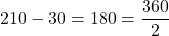 . Correct.
 and
and 
Examiner note: Square roots always come in pairs separated by . If your two square roots are not exactly apart, there is an error in the formula application. Use this as an automatic check.
Problem 5 — ECE Board Exam Type
Find all cube roots of  .
.
Given: , 
Find: All cube roots .
Solution:
Step 1: Identify  ,
,  , and .
Step 2: Compute the modulus of each root.
![\[r^{1/3} = 8^{1/3} = 2\]](https://pinoybix.org/wp-content/ql-cache/quicklatex.com-8401b2951886ecdcb2b6c0c7860ffd60_l3.png "Rendered by QuickLaTeX.com")
Step 3: Apply the nth root formula for , , and  .
.
For :
![\[z_0 = 2\angle\dfrac{90° + 0°}{3} = 2\angle 30°\]](https://pinoybix.org/wp-content/ql-cache/quicklatex.com-941a391b628e3e4c154fcde0d0aa5e52_l3.png "Rendered by QuickLaTeX.com")
For :
![\[z_1 = 2\angle\dfrac{90° + 360°}{3} = 2\angle\dfrac{450°}{3} = 2\angle 150°\]](https://pinoybix.org/wp-content/ql-cache/quicklatex.com-75eaad5e30051dee4367070cd222b452_l3.png "Rendered by QuickLaTeX.com")
For :
![\[z_2 = 2\angle\dfrac{90° + 720°}{3} = 2\angle\dfrac{810°}{3} = 2\angle 270°\]](https://pinoybix.org/wp-content/ql-cache/quicklatex.com-1678a89d3b5c1f753d05c07f2d8e3f06_l3.png "Rendered by QuickLaTeX.com")
Step 4: Verify the spacing.  and
and  . Spacing equals
  . Correct.
,  ,
, 
Examiner note: This is the most frequently tested nth root problem type on the ECE board exam. Three roots, equally spaced at  . The modulus of each root is
  . The principal root is always
  at .
at .
Problem 6 — ECE Board Exam Type
Find all fourth roots of  .
.
Given: ,
Find: All fourth roots .
Solution:
Step 1: Identify  ,
,  , and .
Step 2: Compute the modulus of each root.
![\[r^{1/4} = 16^{1/4} = 2\]](https://pinoybix.org/wp-content/ql-cache/quicklatex.com-71073b36c012c8d4b3ebebe043c7deb3_l3.png "Rendered by QuickLaTeX.com")
Step 3: Apply the nth root formula for ,  ,
,  , and
, and  .
.
For :
![\[z_0 = 2\angle\dfrac{0° + 0°}{4} = 2\angle 0°\]](https://pinoybix.org/wp-content/ql-cache/quicklatex.com-af8c57dbe38653f06f3420a3855a2555_l3.png "Rendered by QuickLaTeX.com")
For :
![\[z_1 = 2\angle\dfrac{0° + 360°}{4} = 2\angle 90°\]](https://pinoybix.org/wp-content/ql-cache/quicklatex.com-14dc4e08a5e5f9d7e3fa1c5ee95e4839_l3.png "Rendered by QuickLaTeX.com")
For :
![\[z_2 = 2\angle\dfrac{0° + 720°}{4} = 2\angle 180°\]](https://pinoybix.org/wp-content/ql-cache/quicklatex.com-97631f4032ae8aec7261a0b492f2f18a_l3.png "Rendered by QuickLaTeX.com")
For  :
:
![\[z_3 = 2\angle\dfrac{0° + 1080°}{4} = 2\angle 270°\]](https://pinoybix.org/wp-content/ql-cache/quicklatex.com-4777e72912296682c165a82afc2b0d01_l3.png "Rendered by QuickLaTeX.com")
Step 4: Verify spacing. Each consecutive root is  apart. Correct.
Step 5: Convert to rectangular form for completeness.
![\[z_0 = 2\angle 0° = 2\]](https://pinoybix.org/wp-content/ql-cache/quicklatex.com-8dc5946d6cd50a932492bd4f45d4c79c_l3.png "Rendered by QuickLaTeX.com")
![\[z_1 = 2\angle 90° = j2\]](https://pinoybix.org/wp-content/ql-cache/quicklatex.com-d01483a75857c3c0bd277880843c5096_l3.png "Rendered by QuickLaTeX.com")
![\[z_2 = 2\angle 180° = -2\]](https://pinoybix.org/wp-content/ql-cache/quicklatex.com-65b3d55dad5add3c26e363e9382f5340_l3.png "Rendered by QuickLaTeX.com")
![\[z_3 = 2\angle 270° = -j2\]](https://pinoybix.org/wp-content/ql-cache/quicklatex.com-5d568716401fdbc1283fc349bab1a7bc_l3.png "Rendered by QuickLaTeX.com")
 ,
,  ,
,  ,
, 
Examiner note: The four fourth roots of  lie at ,
  , , and
  on a circle of radius . In rectangular form they are ,
  ,
,  , and
, and  . This is a classic result that appears in board exams in both polar and rectangular form.
Problem 7 — CE Board Exam Type
Find  if
if  .
.
Given: , exponent 
Find:
Solution:
Step 1: Apply De Moivre’s theorem with .
![\[z^{-2} = 2^{-2}\angle\left[(-2)(30°)\right] = \dfrac{1}{4}\angle(-60°)\]](https://pinoybix.org/wp-content/ql-cache/quicklatex.com-cfdf00fbc4240ee8c290b22361e46fe7_l3.png "Rendered by QuickLaTeX.com")
Step 2: Convert the negative angle to a positive equivalent if needed.
![\[-60° + 360° = 300°\]](https://pinoybix.org/wp-content/ql-cache/quicklatex.com-8eb56d07d7f2e648266c31558c24782f_l3.png "Rendered by QuickLaTeX.com")
![\[z^{-2} = \dfrac{1}{4}\angle 300° = 0.25\angle 300°\]](https://pinoybix.org/wp-content/ql-cache/quicklatex.com-5052f7c8dc886bdc10027b28fe32333a_l3.png "Rendered by QuickLaTeX.com")
Step 3: Convert to rectangular form.
![\[a = 0.25\cos 300° = 0.25(0.5) = 0.125\]](https://pinoybix.org/wp-content/ql-cache/quicklatex.com-8cc422f205bb3243adaacd6389fd9ad5_l3.png "Rendered by QuickLaTeX.com")
![\[b = 0.25\sin 300° = 0.25(-0.866) = -0.2165\]](https://pinoybix.org/wp-content/ql-cache/quicklatex.com-0a1f7624f438527a14c50952a42a6a1f_l3.png "Rendered by QuickLaTeX.com")
 or equivalently
Examiner note: Negative exponents are valid in De Moivre’s theorem. A negative exponent gives 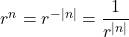 and the angle becomes negative. The result is correct either as a negative angle or converted to its positive equivalent.
Problem 8 — ChE Board Exam Type
Find the principal cube root of  .
.
Given: ,
Find: The principal cube root .
Solution:
Step 1: Convert  to polar form. A negative real number lies on the negative real axis.
![\[r = |-27| = 27 \qquad \theta = 180°\]](https://pinoybix.org/wp-content/ql-cache/quicklatex.com-36ef2063c3365960ffedab1bd6703d62_l3.png "Rendered by QuickLaTeX.com")
![\[z = 27\angle 180°\]](https://pinoybix.org/wp-content/ql-cache/quicklatex.com-15c0c71ace5dcc260d2c6de188904bf0_l3.png "Rendered by QuickLaTeX.com")
Step 2: Compute the modulus of each root.
![\[r^{1/3} = 27^{1/3} = 3\]](https://pinoybix.org/wp-content/ql-cache/quicklatex.com-1693e48b16c311ee41591d2b1575c5a0_l3.png "Rendered by QuickLaTeX.com")
Step 3: Find the principal root using .
![\[z_0 = 3\angle\dfrac{180° + 360°(0)}{3} = 3\angle\dfrac{180°}{3} = 3\angle 60°\]](https://pinoybix.org/wp-content/ql-cache/quicklatex.com-79196666385329804dddf5ec8be2c943_l3.png "Rendered by QuickLaTeX.com")
Step 4: Convert to rectangular form.
![\[a = 3\cos 60° = 3(0.5) = 1.5\]](https://pinoybix.org/wp-content/ql-cache/quicklatex.com-4225575d0d3310882a16d550188911db_l3.png "Rendered by QuickLaTeX.com")
![\[b = 3\sin 60° = 3(0.866) = 2.598\]](https://pinoybix.org/wp-content/ql-cache/quicklatex.com-af78c353c8954aba376ec80c11a54147_l3.png "Rendered by QuickLaTeX.com")

Examiner note: Students often write  as the cube root of because that is the real cube root. That is
  , which is the third root at , not the principal root. The principal root is always at , which here is
  .
.
Problem 9 — EE Board Exam Type
Evaluate  .
.
Given:  , exponent
Find: 
Solution:
Step 1: Convert  to polar form. First find the modulus.
![\[\left|\dfrac{1 + j}{\sqrt{2}}\right| = \dfrac{|1 + j|}{\sqrt{2}} = \dfrac{\sqrt{1^2 + 1^2}}{\sqrt{2}} = \dfrac{\sqrt{2}}{\sqrt{2}} = 1\]](https://pinoybix.org/wp-content/ql-cache/quicklatex.com-c4131a1eb0450c216b395335c60f7559_l3.png "Rendered by QuickLaTeX.com")
Step 2: Find the argument.
![\[\theta = \arctan\!\left(\dfrac{1}{1}\right) = 45°\]](https://pinoybix.org/wp-content/ql-cache/quicklatex.com-fe3be8460a1cc473a0b0dfae335e3e48_l3.png "Rendered by QuickLaTeX.com")
![\[z = 1\angle 45°\]](https://pinoybix.org/wp-content/ql-cache/quicklatex.com-817da765d41413ff3fea66b9ed1c5509_l3.png "Rendered by QuickLaTeX.com")
Step 3: Apply De Moivre’s theorem.
![\[z^{10} = 1^{10}\angle(10 \times 45°) = 1\angle 450°\]](https://pinoybix.org/wp-content/ql-cache/quicklatex.com-2bac9f0f38d35f707f059045fe6a98ac_l3.png "Rendered by QuickLaTeX.com")
Step 4: Reduce the angle.  .
.
![\[z^{10} = 1\angle 90° = \cos 90° + j\sin 90° = 0 + j(1) = j\]](https://pinoybix.org/wp-content/ql-cache/quicklatex.com-8147cfed4055bcd14e6eff0a77bbe657_l3.png "Rendered by QuickLaTeX.com")
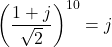
Examiner note: When the modulus is exactly , De Moivre’s theorem reduces to  . The magnitude stays regardless of the power. Only the angle changes. This simplification appears frequently in board exam problems involving unit complex numbers.
Problem 10 — ECE Board Exam Type
Find all cube roots of  and express each root in rectangular form.
Given: ,
Find: All three cube roots in  form.
form.
Solution:
Step 1: Convert  to polar form.
![\[r = 8 \qquad \theta = 180°\]](https://pinoybix.org/wp-content/ql-cache/quicklatex.com-77277bf77298375409bbb2d8c68b2e6d_l3.png "Rendered by QuickLaTeX.com")
![\[z = 8\angle 180°\]](https://pinoybix.org/wp-content/ql-cache/quicklatex.com-261d590f1a8c7bd48213eafda43fdade_l3.png "Rendered by QuickLaTeX.com")
Step 2: Compute the modulus of each root.
Step 3: Apply the nth root formula for , , and .
For :
![\[z_0 = 2\angle\dfrac{180°}{3} = 2\angle 60°\]](https://pinoybix.org/wp-content/ql-cache/quicklatex.com-1fd9d89a9908667fcda4ad6997e27233_l3.png "Rendered by QuickLaTeX.com")
![\[z_0 = 2\cos 60° + j2\sin 60° = 2(0.5) + j2(0.866) = 1 + j\sqrt{3}\]](https://pinoybix.org/wp-content/ql-cache/quicklatex.com-207e013c9281681074e6e947db612ce9_l3.png "Rendered by QuickLaTeX.com")
For :
![\[z_1 = 2\angle\dfrac{180° + 360°}{3} = 2\angle\dfrac{540°}{3} = 2\angle 180°\]](https://pinoybix.org/wp-content/ql-cache/quicklatex.com-c51bb439693428d47a1cce449d63e03d_l3.png "Rendered by QuickLaTeX.com")
![\[z_1 = 2\cos 180° + j2\sin 180° = 2(-1) + j2(0) = -2\]](https://pinoybix.org/wp-content/ql-cache/quicklatex.com-d5786ff15e8ceaf993c10bd200d4ac8d_l3.png "Rendered by QuickLaTeX.com")
For :
![\[z_2 = 2\angle\dfrac{180° + 720°}{3} = 2\angle\dfrac{900°}{3} = 2\angle 300°\]](https://pinoybix.org/wp-content/ql-cache/quicklatex.com-e73f95a50b06a1d0cff925dba7de65f8_l3.png "Rendered by QuickLaTeX.com")
![\[z_2 = 2\cos 300° + j2\sin 300° = 2(0.5) + j2(-0.866) = 1 - j\sqrt{3}\]](https://pinoybix.org/wp-content/ql-cache/quicklatex.com-ec95c635bdda26da4b8b4fe39d11743a_l3.png "Rendered by QuickLaTeX.com")
Step 4: Verify spacing.  and
and  . Spacing equals . Correct.
 ,
,  ,
, 
Examiner note: Notice that is the obvious real cube root of . Students who stop at this answer miss and  , which are complex. The board exam often lists all three roots as choices and awards full marks only when all three are identified correctly.
Common Mistakes and Examiner Traps
These are the most consistent error patterns in board exam solutions for De Moivre’s theorem problems.
| ❌ Common Mistake | ✅ Correct Approach |
|---|---|
| Writing only the principal root and stopping. Finding at and treating it as the complete answer when the problem asks for all roots. |
Count the roots first. An nth root problem always has exactly answers. Write all values of  from from  to to  and compute each one. Never stop at when the problem asks for all roots. and compute each one. Never stop at when the problem asks for all roots. |
Adding between roots instead of . Writing roots at  , ,  , and , and  instead of , instead of ,  , and for a cube root problem. , and for a cube root problem. |
The spacing between consecutive roots is always . For cube roots, . For fourth roots, . Divide by , not use as the step. |
Leaving  unchanged instead of taking the nth root. Using the original modulus instead of for the modulus of each root. unchanged instead of taking the nth root. Using the original modulus instead of for the modulus of each root. |
The modulus of each nth root is , not . For cube roots of , the modulus of each root is , not  . . |
Multiplying instead of raising to the power when applying De Moivre’s theorem. Writing  instead of instead of  for the modulus. for the modulus. |
De Moivre’s theorem raises the modulus to the power :  . The angle is multiplied by : . The angle is multiplied by :  . These are two different operations applied to two different quantities. . These are two different operations applied to two different quantities. |
| Confusing the principal root with the real nth root. Writing as the principal cube root of because it is the obvious real solution. |
The principal root is always at . For  , the principal cube root is , the principal cube root is  . The real cube root corresponds to , which gives . The real cube root corresponds to , which gives  . . |
| Applying De Moivre’s theorem in rectangular form. Attempting to raise directly to the power without converting to polar form first. |
De Moivre’s theorem requires polar form. Always convert to  first, apply the theorem, then convert back to rectangular form if the problem requires it. first, apply the theorem, then convert back to rectangular form if the problem requires it. |
Not reducing angles greater than . Leaving answers like  or or  without reducing to the equivalent angle between and . without reducing to the equivalent angle between and . |
Subtract repeatedly until the angle falls between and . For example, , so  . Always reduce angles in final answers. . Always reduce angles in final answers. |
Board Exam Quick Tips
- Count your roots before writing any answer. An nth root problem has exactly answers. Write through
 at the top of your solution before computing anything. This prevents you from stopping early.
 - The spacing check is a free verification tool. After computing all roots, subtract consecutive angles. They must all equal . If any gap is different, you made an error somewhere. Fix it before writing the final answer.
- The modulus of every root is the same. All roots share the same modulus . If any root comes out with a different magnitude, the root formula was applied incorrectly for that value of .
- For negative real numbers, the polar angle is always
 . A negative real number
  where
where  has
has  and
and  . This comes up constantly in cube root and square root problems involving negative integers.
 - Reduce all angles to between and
 before writing the final answer. An angle of
  is correct mathematically but not in standard form. Subtract until the angle is in the standard range.
 where
where  has
has  and
and  . This comes up constantly in cube root and square root problems involving negative integers.
 is correct mathematically but not in standard form. Subtract
 Frequently Asked Questions
Q1. How is De Moivre’s theorem different from just multiplying a complex number by itself repeatedly?
Repeated multiplication works but becomes impractical for large exponents. Multiplying  five or more times in rectangular form requires multiple FOIL expansions, each with potential for sign errors. De Moivre’s theorem reduces any power — no matter how large — to three steps: convert to polar, raise to the power and multiply
  by , convert back. The result is always the same.
Q2. Why does every complex number have exactly distinct nth roots?
The nth root formula adds  to the principal angle for each value of . When
  , the added angle equals , which brings the root back to the same position as . So the roots at
  are all distinct, and the root at repeats . This gives exactly unique roots.
Q3. What is the difference between the principal root and the real nth root?
The principal root is always computed at . It is the root with the smallest positive argument. The real nth root is the root whose imaginary part is zero — meaning it lies on the real axis. For most complex numbers, these are different roots. For , the real cube root is (which is  at ), while the principal root is
  (which is at ).
Q4. Can De Moivre’s theorem be used for fractional exponents?
Yes. A fractional exponent  is exactly what the nth root formula computes. The formula
 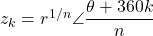 is De Moivre’s theorem applied with in the denominator of the exponent. Rational exponents
  can be handled by raising to the power
  and taking the
  th root, or by applying the theorem with the exponent directly.
Q5. How do I know when to stop finding roots?
Stop when  . For square roots, stop after (two roots total). For cube roots, stop after (three roots total). For fourth roots, stop after (four roots total). When , the formula produces an angle equivalent to the root, so no new information is added.
What is Next
The final part of this series connects everything to real engineering problems. Part 4 shows you exactly where complex numbers appear in AC circuit analysis — impedance, phasors, Ohm’s law in phasor form, complex power, and power factor — with the four most common board exam circuit problem types fully worked out.
→ Continue to Part 4 — Complex Numbers in AC Circuits: Impedance, Phasors, and Power Factor
→ Back to the Complete Complex Numbers ECE and EE Board Exam Reviewer Series
Published by PinoyBIX.org — Engineering Education for Every Filipino Student. Electronics · Mathematics · Board Exam Review · Free for Everyone.
Related Content




P inoyBIX educates thousands of reviewers and students a day in preparation for their board examinations. Also provides professionals with materials for their lectures and practice exams. Help me go forward with the same spirit.
“Will you subscribe today via YOUTUBE?”
TIRED OF ADS?
- Become Premium Member and experienced complete ads-free content browsing.
- Full Content Access to Premium Solutions Exclusive for Premium members
- Access to PINOYBIX FREEBIES folder
- Download Reviewers and Learning Materials Free
- Download Content: You can see download/print button at the bottom of each post.
PINOYBIX FREEBIES FOR PREMIUM MEMBERSHIP:
- CIVIL ENGINEERING REVIEWER
- CIVIL SERVICE EXAM REVIEWER
- CRIMINOLOGY REVIEWER
- ELECTRONICS ENGINEERING REVIEWER (ECE/ECT)
- ELECTRICAL ENGINEERING & RME REVIEWER
- FIRE OFFICER EXAMINATION REVIEWER
- LET REVIEWER
- MASTER PLUMBER REVIEWER
- MECHANICAL ENGINEERING REVIEWER
- NAPOLCOM REVIEWER
- Additional upload reviewers and learning materials are also FREE
FOR A LIMITED TIME
If you subscribe for PREMIUM today!
You will receive an additional 1 month of Premium Membership FREE.
For Bronze Membership an additional 2 months of Premium Membership FREE.
For Silver Membership an additional 3 months of Premium Membership FREE.
For Gold Membership an additional 5 months of Premium Membership FREE.
Join the PinoyBIX community.