
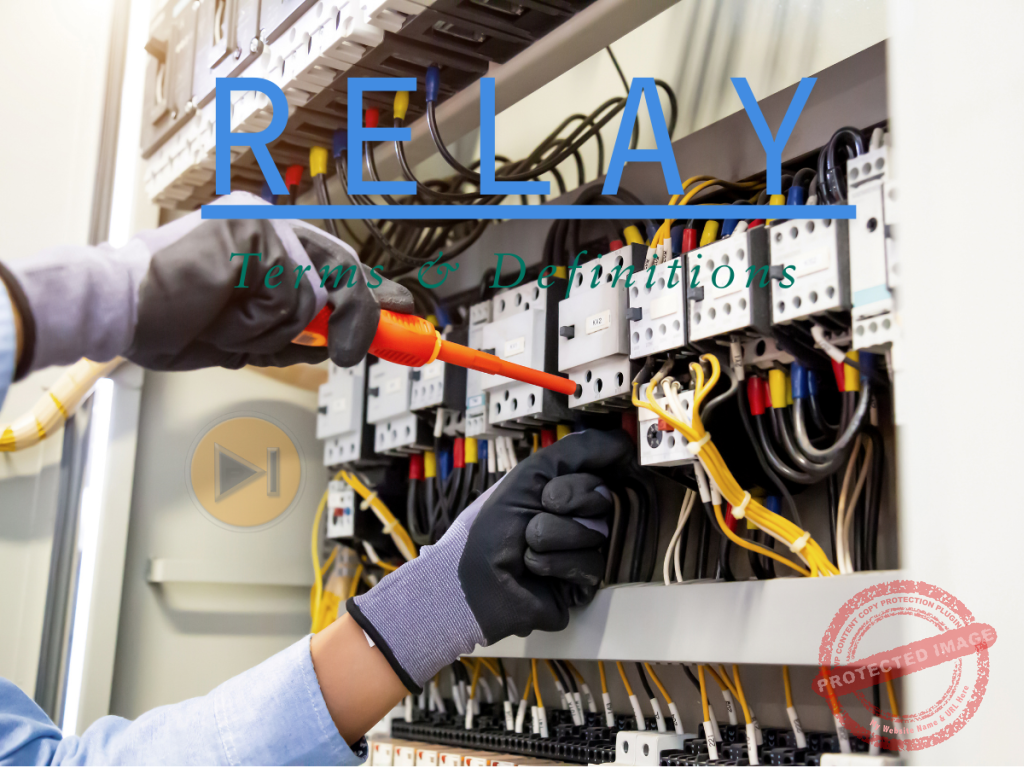
Are relay concepts leaving you confused and overwhelmed as exam day approaches? You’re not alone. Engineering students and professionals across the Philippines consistently rank relay systems among the most challenging topics to master for board exams and professional certifications. The complex terminology, diverse applications, and technical specifications can make studying relays feel like navigating a labyrinth without a map.
We’ve been there too. After helping thousands of Filipino engineering students ace their board exams, we’ve identified that a solid grasp of relay terminology serves as the foundation for success in this critical topic. That’s why we’ve compiled this comprehensive glossary of 101+ relay terms, specifically designed to transform your understanding from basic to board-ready.
Whether you’re cramming for tomorrow’s quiz, preparing for the upcoming board exam, or simply need to refresh your knowledge for a professional project, this guide cuts through the confusion with clear, concise definitions that focus on what examiners actually test. Each term is carefully explained using language that makes complex concepts accessible without oversimplification.
Bookmark this page now – it might just be the difference between passing and excelling in your next engineering challenge.
Relay Fundamentals
1. Relay: An electrically operated switch that uses an electromagnet to mechanically operate a set of electrical contacts.
2. Electromagnetic Relay: A relay that operates on the principle of electromagnetism, where an electromagnet activates a mechanical switching mechanism.
3. Contacts: The conductive parts within a relay that connect or disconnect to control an electrical circuit.
4. Normally Open (NO) Contact: A relay contact that is open (non-conducting) when the relay coil is de-energized.
5. Normally Closed (NC) Contact: A relay contact that is closed (conducting) when the relay coil is de-energized.
6. Change-Over Contact (CO): A relay contact arrangement that includes both NO and NC contacts sharing a common terminal.
7. Coil: The electromagnet component in a relay that, when energized, creates a magnetic field to actuate the contacts.
8. Armature: The movable component in a relay that responds to the electromagnetic field generated by the coil.
9. Pole: A set of contacts controlled by a single relay armature.
10. Throw: The number of different circuits (positions) that each pole can connect to.
11. Single Pole Single Throw (SPST): A relay configuration with one input and one output.
12. Single Pole Double Throw (SPDT): A relay configuration with one input and two possible output connections.
13. Double Pole Single Throw (DPST): A relay configuration with two inputs and two outputs, essentially two SPST switches controlled by a single coil.
14. Double Pole Double Throw (DPDT): A relay configuration with two inputs, each with two possible output connections.
15. Multiple Pole Multiple Throw (MPMT): A relay configuration with multiple poles and multiple throws.
Relay Performance Characteristics
16. Pull-in Voltage: The minimum voltage required to energize a relay and cause its contacts to change state.
17. Drop-out Voltage: The voltage level at which an energized relay’s contacts return to their de-energized state.
18. Contact Resistance: The electrical resistance measured across closed relay contacts.
19. Coil Resistance: The electrical resistance of the relay coil, which determines current draw.
20. Coil Inductance: The property of the relay coil that opposes changes in current flow, measured in henries.
21. Actuation Time: The time interval between the application of power to the relay coil and the changing of the contact state.
22. Release Time: The time interval between the removal of power from the relay coil and the return of contacts to their de-energized state.
23. Bounce Time: The time during which relay contacts make and break connection multiple times before settling into their final position.
24. Operate Time: The total time required for a relay to complete its operation, including actuation and bounce time.
25. Contact Rating: The maximum voltage and current that the relay contacts can safely handle.
26. Dielectric Strength: The maximum voltage a relay’s insulation can withstand without breakdown.
27. Insulation Resistance: The resistance between electrically isolated parts of a relay.
28. Contact Life: The expected number of operations a relay can perform before failure, often specified at specific load conditions.
29. Mechanical Life: The expected number of operations a relay can perform with no electrical load.
30. Electrical Life: The expected number of operations a relay can perform under specified electrical load conditions.
Relay Types by Construction and Principle
31. Electromechanical Relay: A relay that uses an electromagnet to physically move contacts.
32. Reed Relay: A relay that uses magnetism to control one or more reed switches encapsulated within a coil.
33. Latching Relay: A relay that maintains its contact position after the coil is de-energized, requiring a reverse pulse to change state.
34. Non-Latching Relay: A relay that returns to its de-energized state when power is removed from the coil.
35. Solid-State Relay (SSR): An electronic switching device with no moving parts that uses semiconductor components to switch loads.
36. Hybrid Relay: A relay that combines electromechanical contacts with solid-state circuitry.
37. Time Delay Relay: A relay designed to introduce a controlled time delay in the operation of its contacts.
38. Thermal Relay: A relay that operates based on the thermal expansion of materials, often used for overload protection.
39. Mercury Wetted Relay: A relay using liquid mercury to provide low contact resistance and bounce-free operation.
40. Polarized Relay: A relay with a permanent magnet that makes the armature movement dependent on the direction of current flow.
41. Vacuum Relay: A relay with contacts enclosed in a vacuum environment, used for high-voltage applications.
42. Gas-Filled Relay: A relay with contacts sealed in an inert gas environment to prevent arcing and oxidation.
Protective and Specialty Relays
43. Overload Relay: A protective relay that detects excessive current and opens a circuit to prevent equipment damage.
44. Overcurrent Relay: A protection relay that operates when current exceeds a predetermined value.
45. Undervoltage Relay: A relay that activates when voltage drops below a set threshold.
46. Overvoltage Relay: A relay that activates when voltage rises above a set threshold.
47. Differential Relay: A protective relay that compares current entering and leaving a protected zone.
48. Distance Relay: A protection relay that measures the impedance between the relay location and the fault point.
49. Ground Fault Relay: A relay designed to detect current leakage to ground.
50. Phase Sequence Relay: A protective relay that monitors the phase sequence of a three-phase power system.
51. Buchholz Relay: A protective device used in oil-immersed transformers to detect faults.
52. Pilot Relay: A sensitive relay used to control another relay or contactor in a control circuit.
53. Auxiliary Relay: A relay used to multiply or amplify the number of contacts available from another relay or controller.
54. Impulse Relay: A relay that changes its state with each momentary impulse of control current.
55. Lockout Relay: A protective relay that locks out (prevents restarting) after a trip until manually reset.
56. Power Factor Relay: A relay that responds to changes in power factor in an electrical system.
57. Frequency Relay: A protective relay that monitors power system frequency and takes action when it deviates from set limits.
58. Contactor: A heavy-duty relay designed for switching high-current loads.
Relay Protection and Accessories
59. Freewheeling Diode: A diode connected across a relay coil to suppress voltage spikes when the coil is de-energized.
60. Snubber Circuit: A circuit used to suppress voltage transients that occur when switching inductive loads.
61. Relay Socket: A mounting device that allows for easy relay replacement without rewiring.
62. Relay Module: A prepackaged assembly containing a relay and associated components.
63. Relay Shield: A protection device or enclosure that provides mechanical and environmental protection for a relay.
64. Interposing Relay: A relay used to interface between different voltage levels or types of control systems.
65. Latch Mechanism: The mechanical system in a latching relay that maintains contact position without continued power.
66. Coupling Relay: A relay used to isolate two electrical circuits while allowing control signals to pass between them.
67. Pulse Transformer: A transformer used to couple digital pulses between circuits while providing electrical isolation.
68. Bias Spring: A spring in a relay that provides a mechanical bias to the armature, affecting pull-in and drop-out characteristics.
69. Contact Wetting Current: The minimum current required to break through oxides on relay contacts.
70. Arc Suppression: Techniques or devices used to minimize arcing across relay contacts during switching.
Relay Testing and Measurement
71. Insulation Testing: The process of measuring the insulation resistance of a relay to ensure proper isolation.
72. Contact Resistance Measurement: The process of measuring the resistance across closed relay contacts.
73. Coil Resistance Measurement: The process of measuring the resistance of a relay coil.
74. Pick-up Test: A test to determine the minimum voltage or current required to actuate a relay.
75. Drop-out Test: A test to determine the voltage or current level at which an energized relay de-actuates.
76. Timing Test: A test to measure the operating and release times of a relay.
77. Coil Voltage Tolerance: The acceptable range of voltages at which a relay coil will operate correctly.
78. Duty Cycle Rating: The ratio of “on time” to the total cycle time that a relay can safely handle.
79. Functional Test: A comprehensive test to verify that a relay operates as expected under normal conditions.
80. Endurance Test: A test to verify the expected mechanical or electrical life of a relay.
Relay Applications and Systems
81. Control Relay: A relay used in control circuits to perform logical operations or sequence control.
82. Protective Relaying: The application of relays to detect abnormal power system conditions and initiate circuit breaker operations.
83. Relay Logic: A system where multiple relays are interconnected to perform logical functions.
84. Relay Panel: A panel or cabinet housing multiple relays for system protection or control.
85. Relay Coordination: The process of setting protective relays to operate in a specific sequence to isolate faults appropriately.
86. Relay Setting: The configuration of protective relay parameters to define its operation under various conditions.
87. Relay Selectivity: The ability of a protection system to identify and isolate only the faulty part of the system.
88. Trip Circuit: The circuit that carries the signal from a protective relay to the circuit breaker trip coil.
89. Auto-Reclosing Relay: A relay that automatically attempts to reclose a circuit breaker after a trip.
90. Supervisory Control: The remote monitoring and control of relays and protective systems.
91. Programmable Relay: A relay whose functions can be programmed to perform various control tasks.
92. Digital Relay: A microprocessor-based relay that uses digital processing for protection and control functions.
93. Relay Network: An interconnected system of relays designed to protect a power system.
94. Relay Testing Software: Specialized software used to test and validate the operation of protective relays.
95. SCADA Interface: The connection between relays and Supervisory Control and Data Acquisition systems.
Modern Relay Technologies
96. Microprocessor Relay: A relay that uses a microprocessor to perform its protection and control functions.
97. IED (Intelligent Electronic Device): An advanced digital relay with communication capabilities and multiple protection functions.
98. Relay Communication Protocol: A standardized method for relays to exchange information with control systems.
99. Numerical Relay: A digital relay that uses numerical algorithms for protection functions.
100. Adaptive Relay: A relay capable of adjusting its settings automatically based on system conditions.
101. Self-Monitoring Relay: A relay that continuously monitors its own operation and reports abnormalities.
102. IoT Relay: A relay that can connect to the Internet of Things for remote monitoring and control.
103. Ethernet Relay: A relay with Ethernet communication capabilities for integration with networked control systems.
104. Wireless Relay: A relay that can be controlled via wireless communication technologies.
105. Power Line Carrier Relay: A relay that uses power lines for communication of control or protection signals.
106. Synchrophasor Relay: A relay that utilizes precise time-synchronized measurements to monitor power system stability.
107. Wide Area Protection Relay: A relay that uses data from multiple locations for system-wide protection decisions.
108. Bi-stable Relay: A relay with two stable states that maintains its last position without power.
109. Security Relay: A relay designed with enhanced cybersecurity features to prevent unauthorized access or control.
110. Smart Grid Relay: A relay designed for integration with smart grid systems, featuring advanced communication and control capabilities.
111. Energy Monitoring Relay: A relay that includes functionality to monitor and report on energy usage or power quality.
Mastering relay terminology isn’t just about memorizing definitions – it’s about building the confidence to tackle even the most complex engineering problems with precision and clarity. The 101+ terms we’ve covered represent the critical knowledge foundation that separates struggling students from successful engineers in both examinations and real-world applications.
Remember that understanding these concepts thoroughly can save you precious minutes during time-pressured exams, potentially turning borderline scores into comfortable passes. Many of our Pinoybix community members report that relay questions often account for 5-15% of technical exams, making this knowledge investment particularly valuable.
Don’t stop here. Practice applying these terms through our related practice questions and problem sets. Join our discussion forums to clarify any remaining confusion. Share this resource with your classmates – explaining concepts to others is one of the most effective ways to cement your own understanding.
The engineering path is challenging, but you don’t have to walk it alone. With the right resources and preparation, you can approach relay concepts with the same confidence as any other engineering topic. Your journey from engineering student to licensed professional continues, and the Pinoybix team is here to support you every step of the way.
Ready to put your relay knowledge to the test? Check out our practice exam section, where you can apply these definitions to real board exam-style questions. Your engineering success story starts here!
Related Content




P inoyBIX educates thousands of reviewers and students a day in preparation for their board examinations. Also provides professionals with materials for their lectures and practice exams. Help me go forward with the same spirit.
“Will you subscribe today via YOUTUBE?”
TIRED OF ADS?
- Become Premium Member and experienced complete ads-free content browsing.
- Full Content Access to Premium Solutions Exclusive for Premium members
- Access to PINOYBIX FREEBIES folder
- Download Reviewers and Learning Materials Free
- Download Content: You can see download/print button at the bottom of each post.
PINOYBIX FREEBIES FOR PREMIUM MEMBERSHIP:
- CIVIL ENGINEERING REVIEWER
- CIVIL SERVICE EXAM REVIEWER
- CRIMINOLOGY REVIEWER
- ELECTRONICS ENGINEERING REVIEWER (ECE/ECT)
- ELECTRICAL ENGINEERING & RME REVIEWER
- FIRE OFFICER EXAMINATION REVIEWER
- LET REVIEWER
- MASTER PLUMBER REVIEWER
- MECHANICAL ENGINEERING REVIEWER
- NAPOLCOM REVIEWER
- Additional upload reviewers and learning materials are also FREE
FOR A LIMITED TIME
If you subscribe for PREMIUM today!
You will receive an additional 1 month of Premium Membership FREE.
For Bronze Membership an additional 2 months of Premium Membership FREE.
For Silver Membership an additional 3 months of Premium Membership FREE.
For Gold Membership an additional 5 months of Premium Membership FREE.
Join the PinoyBIX community.