
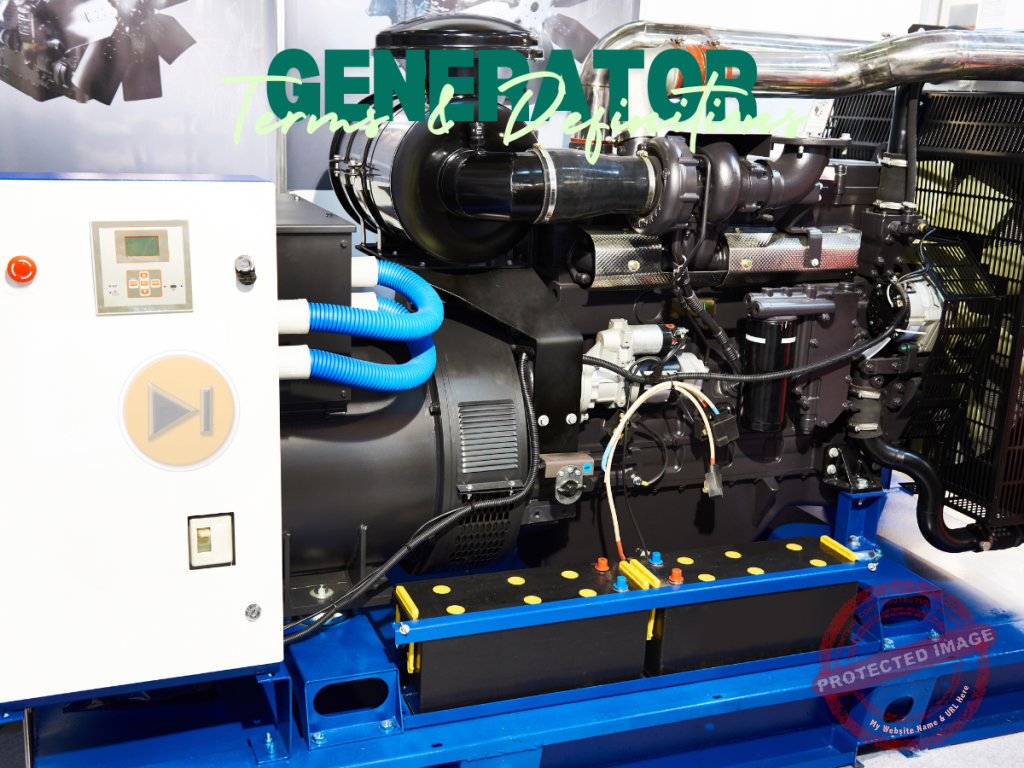
Are you feeling overwhelmed by the vast array of generator concepts you need to master for your upcoming engineering board exam? You’re not alone. Thousands of engineering students across the Philippines struggle with the complex terminology and intricate principles of electrical generators—a topic that consistently appears in board exams and often determines whether you pass or fail.
As an engineering student, you know that generators represent one of the fundamental pillars of electrical engineering, yet their diverse components, classifications, and operating principles can seem like an insurmountable mountain of information to memorize. The stress of trying to understand these concepts while the exam date looms closer can be paralyzing.
That’s why we’ve created this comprehensive guide to electrical generator terminology. We’ve distilled decades of engineering knowledge into 110 essential terms that board examiners frequently test. Each definition is crafted with clarity and precision, focusing on the exact concepts you need to understand to confidently answer exam questions. No more wading through dense textbooks or confusing online resources that leave you more confused than when you started.
Whether you’re reviewing generator principles for the first time or doing your final revision days before the exam, this carefully structured resource will serve as your definitive reference guide. Let’s transform generator concepts from your greatest challenge into your strongest advantage on exam day.
Basic Generator Concepts
1. Generator: A machine that converts mechanical energy into electrical energy using electromagnetic induction principles.
2. Electromagnetic Induction: The process by which a changing magnetic field creates an electromotive force (EMF) in a conductor, forming the fundamental operating principle of generators.
3. Faraday’s Law: States that the induced electromotive force in a closed circuit is directly proportional to the rate of change of magnetic flux through the circuit.
4. Lenz’s Law: States that the direction of an induced current flows to create a magnetic field that opposes the change in magnetic flux that induced the current.
5. Stator: The stationary part of a generator containing windings or permanent magnets that create the magnetic field.
6. Rotor: The rotating component of a generator, typically containing windings or magnets, that moves through the magnetic field to generate electricity.
7. Armature: The power-producing component of a generator where the current is induced, which can be either the rotor or stator, depending on the generator design.
8. Field Windings: Coils of wire wound around iron cores that produce the magnetic field necessary for generator operation when energized.
9. Prime Mover: The external mechanical energy source that drives the generator, such as a turbine, engine, or wind power system.
10. Commutator: A mechanical switch in DC generators that reverses the current direction in the armature windings to produce direct current output.
11. Slip Rings: Continuous rings connected to the rotor winding ends in AC generators to maintain electrical contact with the stationary external circuit.
12. Brushes: Conductive contacts (typically carbon-based) that maintain electrical connection with rotating components like commutators or slip rings.
13. Air Gap: The carefully engineered space between the rotor and stator that allows rotation while maintaining optimal magnetic coupling.
Generator Classifications and Types
14. AC Generator: A generator that produces alternating current (AC) electricity, where the current periodically reverses direction.
15. DC Generator: A generator that produces direct current (DC) electricity, where the current flows in a constant direction.
16. Alternator: A specific type of AC generator where the armature winding is stationary and the field winding rotates.
17. Synchronous Generator: A generator whose output frequency is synchronized with the rotational speed of its rotor.
18. Asynchronous Generator: A generator whose output frequency is not synchronized with its rotational speed, often using induction principles.
19. Induction Generator: A type of asynchronous generator that operates by electromagnetic induction from the stator field to the rotor.
20. Self-Excited Generator: A generator that derives its field excitation from its own output through self-inductance.
21. Separately Excited Generator: A generator whose field excitation comes from an external power source independent of its output.
22. Permanent Magnet Generator (PMG): A generator using permanent magnets rather than electromagnets to create the magnetic field.
23. Shunt Generator: A DC generator where the field windings are connected in parallel (shunt) with the armature.
24. Series Generator: A DC generator where field windings are connected in series with the armature.
25. Compound Generator: A DC generator combining both series and shunt field windings to optimize performance characteristics.
26. Homopolar Generator: A DC generator that produces current without requiring a commutator by using a conducting disc rotating in a magnetic field.
27. Linear Generator: A generator that produces electrical energy through linear rather than rotational motion.
28. Magneto: A small generator using permanent magnets, commonly used in applications not requiring high power output.
29. Hydroelectric Generator: A generator driven by water turbines converting hydraulic energy into electrical energy.
30. Turbo Generator: A high-speed generator directly coupled to a steam or gas turbine, typically used in thermal power plants.
31. Wind Generator: A generator driven by wind turbines, converting wind energy into electrical energy.
32. Diesel Generator: A generator driven by a diesel engine, commonly used for backup or remote power applications.
Generator Performance and Operating Characteristics
33. Rated Capacity: The maximum output power a generator can produce continuously under specified conditions, typically expressed in kVA or MW.
34. Power Factor: The ratio of real power (kW) to apparent power (kVA) in an AC generator, indicating the efficiency of power delivery.
35. Generator Efficiency: The ratio of electrical output power to mechanical input power, expressed as a percentage.
36. Voltage Regulation: The change in generator terminal voltage between no-load and full-load conditions, expressed as a percentage of rated voltage.
37. Frequency: The number of complete cycles of AC voltage produced per second, measured in Hertz (Hz).
38. Synchronous Speed: The rotational speed required for a generator to produce power at the system’s standard frequency, calculated as (120 × frequency)/number of poles.
39. Armature Reaction: The effect of the magnetic field produced by current flowing in the armature windings on the main magnetic field of a generator.
40. Building Up: The process by which a self-excited generator develops its rated voltage from residual magnetism when starting.
41. Critical Field Resistance: The maximum resistance in the field circuit at which a self-excited generator can build up voltage.
42. Critical Speed: The minimum speed at which a self-excited generator can build up voltage with a given field resistance.
43. Magnetization Curve: Also called the saturation curve, shows the relationship between field current and generated voltage at constant speed.
44. Load Characteristic: The relationship between terminal voltage and load current at constant speed and field current.
45. External Characteristic: The relationship between terminal voltage and load current when the field resistance remains constant.
46. Residual Magnetism: The magnetic flux that remains in the field poles after the field current is removed, essential for self-excitation.
47. Excitation Systems: The components and methods used to provide field current to create and control the magnetic field in a generator.
48. Automatic Voltage Regulator (AVR): A device that automatically maintains a constant voltage level in a generator by controlling field excitation.
49. Transient Response: The behavior of a generator during sudden changes in load or operating conditions.
50. Hunting: Oscillatory behavior in generator output caused by rotor speed fluctuations around the synchronous speed.
51. Damper Windings: Conductive bars embedded in the rotor pole faces to prevent hunting and improve stability.
Generator Components and Construction
52. Core: The magnetic material (typically laminated silicon steel) that provides a path for the magnetic flux in a generator.
53. Laminations: Thin sheets of magnetic material stacked together to form the core, designed to reduce eddy current losses.
54. Pole Shoes: Expanded ends of field poles that spread the magnetic flux more uniformly across the air gap.
55. End Bells: Structural components at each end of a generator that support the bearings and maintain alignment.
56. Bearing: Mechanical components that support and reduce friction for the rotating parts of a generator.
57. Insulation System: Materials used to electrically isolate conductive components from each other and from the generator frame.
58. Cooling System: Components designed to remove heat from a generator, including fans, heat exchangers, and cooling channels.
59. Winding Pitch: The span of a coil measured by the number of slots or pole pitches it covers in the stator or rotor.
60. Distributed Winding: A winding arrangement where each phase occupies multiple slots around the stator circumference.
61. Concentrated Winding: A winding arrangement where each coil is wound around a single pole or tooth structure.
62. Coil Span: The distance between the two sides of a coil, typically expressed as a fraction of a pole pitch.
63. Terminal Box: The enclosure where generator output connections are made to external circuits.
64. Interpoles: Additional small poles placed between main field poles in DC generators to improve commutation.
65. Compensating Windings: Windings embedded in the pole faces of DC generators to counteract armature reaction effects.
Generator Protection and Maintenance
66. Overcurrent Protection: Devices that protect a generator from damage due to excessive current flow.
67. Differential Protection: A protection scheme that compares current entering and leaving each winding to detect internal faults.
68. Ground Fault Protection: Systems that detect and protect against current flowing between windings and grounded parts.
69. Loss of Field Protection: Protective devices that detect failure or reduction of field excitation current.
70. Reverse Power Protection: Protection against power flowing into rather than out of a generator, which could cause motoring.
71. Thermal Protection: Systems that monitor generator temperature and protect against overheating.
72. Insulation Resistance Test: Measurement of resistance between windings and ground to assess insulation condition.
73. Polarization Index: The ratio of insulation resistance measured at two different times, indicating insulation quality.
74. Megger Testing: Using a megohmmeter to test the insulation resistance of generator windings.
75. Winding Resistance Measurement: Testing that checks for open circuits, poor connections, or shorted turns in windings.
76. Dielectric Absorption Ratio: The ratio of insulation resistance at different time intervals, used to assess insulation quality.
77. Partial Discharge: Small electrical sparks that occur in generator insulation due to high voltage stress, indicating potential insulation degradation.
78. Condition Monitoring: Continuous or periodic assessment of generator parameters to detect potential problems before failure.
79. Predictive Maintenance: Maintenance strategy based on monitoring generator condition to predict when service is required.
80. Overspeed Protection: Systems that prevent generator damage by detecting and responding to excessive rotational speed.
Generator System Integration and Control
81. Synchronization: The process of matching voltage, frequency, and phase angle of a generator to connect it to a power system.
82. Paralleling: The operation of connecting multiple generators to work together in a power system.
83. Load Sharing: The distribution of electrical load between multiple generators operating in parallel.
84. Droop Control: A method of controlling parallel generators where output frequency decreases as load increases.
85. Isochronous Control: A generator control mode that maintains constant frequency regardless of load changes.
86. Governor: A device that regulates the speed of a prime mover to maintain constant generator frequency.
87. Power System Stabilizer (PSS): A control device that improves power system stability by modulating generator excitation.
88. Generator Control Unit (GCU): An electronic system that manages various generator functions including voltage regulation and protection.
89. Exciter: A device that provides direct current to the field windings of a generator to create the magnetic field.
90. Static Excitation System: An excitation system using solid-state components to convert AC power to DC for field excitation.
91. Brushless Excitation: An excitation system without sliding contacts, using a small auxiliary generator on the same shaft.
92. Transfer Function: Mathematical representation of the relationship between input and output of a generator control system.
93. Load Shedding: Intentionally removing portions of load to maintain generator stability during system disturbances.
94. Black Start: The process of restarting a generator without relying on the external power network after a complete outage.
95. Island Operation: Operation of a generator or group of generators isolated from the main power grid.
Advanced Generator Concepts
96. Superconducting Generator: A generator using superconducting materials for field windings to achieve higher magnetic fields with lower losses.
97. Fault Ride-Through: The ability of a generator to remain connected and operating during and after a system fault.
98. Virtual Inertia: The synthetic inertial response provided by power electronic controllers to support grid stability.
99. Generator Capability Curve: A graphical representation of the operational limits of a generator in terms of active and reactive power.
100. Negative Sequence Current: Unbalanced currents in a three-phase generator that create a magnetic field rotating opposite to the rotor.
101. Zero Sequence Current: A component of unbalanced three-phase currents that does not produce a rotating magnetic field.
102. Reactive Power Control: The management of a generator’s ability to produce or absorb reactive power to maintain voltage stability.
103. Maximum Continuous Rating (MCR): The highest output a generator can maintain indefinitely without exceeding design limitations.
104. Short Circuit Ratio: The ratio of field current required for rated voltage at open circuit to field current required for rated armature current at short circuit.
105. Saliency: The property of having different magnetic characteristics in different directions, typically in rotors with protruding poles.
106. Torque Angle: The angle between the rotor magnetic field and the resultant stator magnetic field in a synchronous generator.
107. Damping Coefficient: A measure of a generator’s ability to suppress oscillations during transient conditions.
108. Fault Current Contribution: The amount of current a generator supplies during a system fault, important for protection system design.
109. Harmonics: Frequency components in generator output that are multiples of the fundamental frequency, affecting power quality.
110. Field Suppression: Rapidly reducing or eliminating field current during fault conditions to limit fault current magnitude.
Mastering these 101+ essential generator terms doesn’t just prepare you for the engineering board exam—it builds the foundation for your entire engineering career. By understanding these concepts thoroughly, you’ve equipped yourself with knowledge that will serve you in countless professional situations, from power plant operations to system design and maintenance.
Remember that successful exam preparation isn’t about memorizing definitions word-for-word, but about truly comprehending the underlying principles. Use this guide as your reference point, but strengthen your understanding by working through practice problems, drawing diagrams, and explaining concepts to your peers.
The journey to becoming a licensed engineer is challenging, but you’re not taking it alone. Thousands of students before you have faced these same obstacles and succeeded. With this comprehensive terminology guide as your companion, you now have a powerful tool to overcome one of the most difficult aspects of the board exam.
We encourage you to bookmark this page for quick reference during your study sessions. Return to it frequently as you progress through your review, and you’ll find that these once-intimidating concepts become second nature. As exam day approaches, you’ll walk in with confidence, knowing that you’ve mastered the generator terminology that stands between you and your engineering license.
What generator concept do you find most challenging? Share your thoughts in the comments below, and let’s help each other succeed on the upcoming board exam!
Related Content



P inoyBIX educates thousands of reviewers and students a day in preparation for their board examinations. Also provides professionals with materials for their lectures and practice exams. Help me go forward with the same spirit.
“Will you subscribe today via YOUTUBE?”
TIRED OF ADS?
- Become Premium Member and experienced complete ads-free content browsing.
- Full Content Access to Premium Solutions Exclusive for Premium members
- Access to PINOYBIX FREEBIES folder
- Download Reviewers and Learning Materials Free
- Download Content: You can see download/print button at the bottom of each post.
PINOYBIX FREEBIES FOR PREMIUM MEMBERSHIP:
- CIVIL ENGINEERING REVIEWER
- CIVIL SERVICE EXAM REVIEWER
- CRIMINOLOGY REVIEWER
- ELECTRONICS ENGINEERING REVIEWER (ECE/ECT)
- ELECTRICAL ENGINEERING & RME REVIEWER
- FIRE OFFICER EXAMINATION REVIEWER
- LET REVIEWER
- MASTER PLUMBER REVIEWER
- MECHANICAL ENGINEERING REVIEWER
- NAPOLCOM REVIEWER
- Additional upload reviewers and learning materials are also FREE
FOR A LIMITED TIME
If you subscribe for PREMIUM today!
You will receive an additional 1 month of Premium Membership FREE.
For Bronze Membership an additional 2 months of Premium Membership FREE.
For Silver Membership an additional 3 months of Premium Membership FREE.
For Gold Membership an additional 5 months of Premium Membership FREE.
Join the PinoyBIX community.