
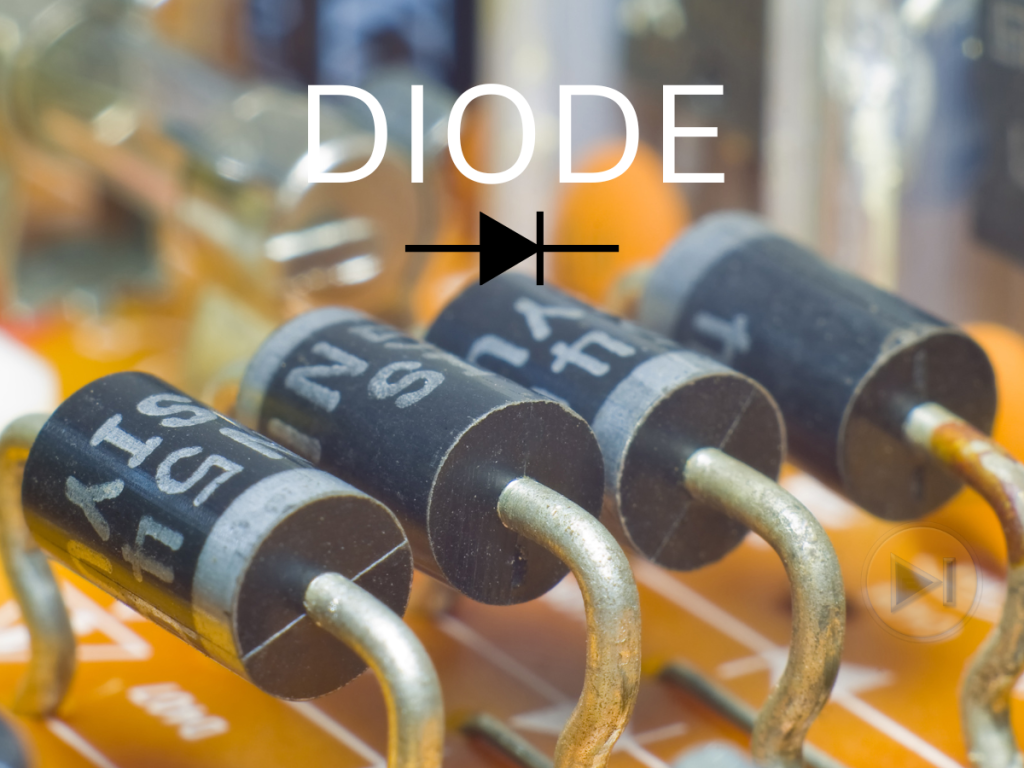
Welcome to the most comprehensive diode terminology resource available for electrical engineering students and professionals. Understanding semiconductor diodes is fundamental to mastering electronic circuit design, power systems, and modern technology applications. Whether you’re preparing for board examinations, university finals, or simply strengthening your engineering knowledge base, this extensive glossary of 111 diode-related terms will serve as your ultimate reference guide.
Diodes are the workhorses of electronic circuits—converting AC to DC, protecting sensitive components from voltage spikes, generating light in LEDs, detecting signals in communication systems, and countless other applications across every field of electrical engineering. From basic P-N junction concepts to cutting-edge developments in quantum diode technology, this meticulously organized collection covers the entire spectrum of diode knowledge required by Filipino engineering students and electronics enthusiasts worldwide.
Each definition has been carefully crafted to balance technical accuracy with clarity, incorporating key terminology that reinforces understanding of related concepts. Unlike typical glossaries that provide only superficial explanations, our definitions include crucial context about how each term relates to practical applications and theoretical frameworks in semiconductor physics. This approach makes complex concepts more accessible while ensuring you develop a robust, interconnected understanding of diode technology.
Let’s begin our comprehensive exploration of diode terminology that will transform your approach to studying semiconductor electronics!
Hey, have you checked out the new Premium Feature, FlipBook? It’s pretty cool!
Basic Diode Fundamentals
1. Diode: A two-terminal semiconductor device that allows current to flow in one direction while blocking it in the reverse direction, functioning as an electronic check valve.
2. P-N Junction: The boundary interface between P-type and N-type semiconductor materials in a diode, where the unique electrical properties of the device are formed.
3. Anode: The positive terminal of a diode, typically connected to the P-type semiconductor material, where conventional current enters the device.
4. Cathode: The negative terminal of a diode, typically connected to the N-type semiconductor material, where conventional current exits the device.
5. Forward Bias: The operational state where voltage is applied to a diode in the direction that allows current to flow, with the anode at a higher potential than the cathode.
6. Reverse Bias: The operational state where voltage is applied to prevent current flow through a diode, with the cathode at a higher potential than the anode.
7. Depletion Region: The area at the P-N junction that is depleted of charge carriers (electrons and holes), creating a barrier to current flow that varies with applied voltage.
8. Majority Carriers: The predominant charge carriers in a doped semiconductor (electrons in N-type and holes in P-type material) that contribute to current flow in a diode.
9. Minority Carriers: The less abundant charge carriers in a doped semiconductor (holes in N-type and electrons in P-type material) that play a role in reverse bias leakage current.
10. Diffusion Current: The movement of charge carriers across the P-N junction due to concentration gradients, contributing to the forward current in a diode.
Diode Electrical Characteristics
11. I-V Characteristic Curve: The graphical representation of a diode’s current-voltage relationship, showing the non-linear conduction behavior under different bias conditions.
12. Cut-in Voltage: The minimum forward voltage required to turn on a diode and allow significant current flow, typically 0.7V for silicon diodes and 0.3V for germanium diodes.
13. Knee Voltage: The point on the diode’s forward characteristic curve where current begins to increase rapidly, marking the transition from non-conducting to conducting state.
14. Forward Voltage Drop: The voltage appearing across a diode when it conducts current in the forward direction, typically 0.7V for silicon diodes at normal operating currents.
15. Forward Current: The current flowing through a diode when forward biased above the cut-in voltage, typically denoted as IF.
16. Reverse Saturation Current: The small leakage current that flows when a diode is reverse biased, denoted as IS or I₀, caused by thermally generated minority carriers.
17. Breakdown Voltage: The reverse voltage at which a diode’s resistance significantly decreases, allowing substantial reverse current to flow, potentially damaging the device.
18. Reverse Recovery Time: The time required for a diode to stop conducting and return to its blocking state when the applied voltage changes from forward to reverse bias.
19. Avalanche Breakdown: A phenomenon occurring when a high reverse voltage causes acceleration of electrons, leading to collision ionization and exponential current increase in the diode.
20. Zener Breakdown: A breakdown mechanism occurring at lower voltages due to quantum tunneling effects across the barrier, utilized intentionally in Zener diodes.
Diode Parameters and Specifications
21. Peak Inverse Voltage (PIV): The maximum reverse voltage a diode can withstand without breakdown, a critical parameter in rectifier applications.
22. Maximum Forward Current: The highest current a diode can conduct continuously without exceeding its thermal limits, typically specified on datasheets.
23. Junction Capacitance: The capacitance formed at the P-N junction depletion region, affecting the diode’s high-frequency performance and switching characteristics.
24. Diffusion Capacitance: The capacitance that arises due to charge storage in a forward-biased diode, affecting its transient response during switching.
25. Power Dissipation: The product of diode current and voltage, representing the thermal energy generated during operation that must be managed to prevent overheating.
26. Thermal Resistance: A measure of a diode’s ability to transfer heat from its junction to the ambient environment, typically expressed in °C/W.
27. Operating Temperature Range: The specified minimum and maximum temperatures within which a diode can function reliably without performance degradation.
28. Temperature Coefficient: The rate at which a diode’s electrical characteristics change with temperature, affecting stability in varying environmental conditions.
29. Reverse Recovery Charge: The amount of stored charge that must be removed when switching a diode from forward to reverse bias, affecting switching speed.
30. Ideality Factor: A parameter in the diode equation that accounts for recombination in the depletion region, typically between 1 and 2 for practical diodes.
Common Diode Types
31. Rectifier Diode: A diode designed to convert alternating current (AC) to direct current (DC) by allowing current flow only during positive half-cycles of the input signal.
32. Signal Diode: A small, low-power diode optimized for processing electronic signals rather than power conversion, featuring fast switching and low capacitance.
33. Zener Diode: A specially designed diode that can operate safely in the reverse breakdown region at a specific voltage, commonly used in voltage regulation circuits.
34. Light Emitting Diode (LED): A diode that emits light when forward biased, converting electrical energy to optical radiation through electron-hole recombination.
35. Photodiode: A diode sensitive to light, operating in reverse bias to detect photons and generate current proportional to light intensity through the photovoltaic effect.
36. Schottky Diode: A diode formed by a metal-semiconductor junction instead of a P-N junction, featuring lower forward voltage drop and faster switching speeds.
37. Varactor Diode: A diode designed to function as a voltage-controlled capacitor when reverse biased, utilized in frequency tuning circuits and voltage-controlled oscillators.
38. Tunnel Diode: A heavily doped diode exhibiting negative differential resistance in part of its operating range due to quantum tunneling effects, useful in high-frequency applications.
39. PIN Diode: A diode with an intrinsic semiconductor layer between P and N regions, providing improved RF and microwave switching characteristics and fast recovery time.
40. Power Diode: A diode designed to handle high current and power levels, used in industrial power supplies and motor control applications.
Specialized Diode Types
41. Avalanche Diode: A diode specifically designed to operate in the avalanche breakdown region, used for voltage reference and surge protection applications.
42. Backward Diode: A tunnel diode variant optimized for operation at very small voltages, used in sensitive detection circuits and low-level signal processing.
43. Step Recovery Diode: A diode with abrupt changes in stored charge during switching, enabling the generation of very short pulses for high-frequency applications.
44. Gunn Diode: A device made from gallium arsenide or gallium nitride that exhibits negative differential resistance when voltage exceeds a critical value, used in microwave oscillators.
45. IMPATT Diode: Impact Ionization Avalanche Transit Time diode, a microwave device operating in avalanche breakdown mode to generate high-frequency oscillations.
46. BARITT Diode: Barrier Injection Transit Time diode, a microwave semiconductor device used in oscillator and amplifier circuits for high-frequency applications.
47. Laser Diode: A diode that produces coherent light through stimulated emission when biased above a threshold current, used in optical communications and storage devices.
48. Solar Cell: A specialized photodiode optimized to convert sunlight into electrical energy through the photovoltaic effect, used in renewable energy applications.
49. TVS Diode: Transient Voltage Suppression diode, designed to protect sensitive electronics from voltage spikes and electrostatic discharge events.
50. Fast Recovery Diode: A diode with minimal reverse recovery time, designed for high-frequency switching power supplies and inverter applications.
Diode Circuit Applications
51. Half-Wave Rectifier: A circuit using a single diode to convert AC to pulsating DC by conducting during only one half-cycle of the input waveform.
52. Full-Wave Rectifier: A circuit using multiple diodes to convert both positive and negative half-cycles of an AC input into a unidirectional pulsating DC output.
53. Bridge Rectifier: A specific full-wave rectifier configuration using four diodes arranged in a bridge formation to efficiently convert AC to pulsating DC.
54. Voltage Doubler: A circuit using diodes and capacitors to produce a DC output voltage approximately twice the peak of the applied AC input voltage.
55. Voltage Multiplier: A cascade of diode-capacitor stages that produces a DC output voltage several times higher than the peak of the applied AC input voltage.
56. Clipper Circuit: A circuit that uses diodes to remove or “clip” portions of an input signal that exceed certain voltage levels, used in signal processing.
57. Clamper Circuit: A diode-based circuit that shifts a waveform’s DC level without changing its shape, effectively “clamping” one extreme of the waveform to a desired level.
58. Peak Detector: A diode circuit that captures and holds the peak value of an input signal, commonly used in measurement and signal processing applications.
59. Voltage Regulator: A circuit often employing Zener diodes to maintain a constant output voltage despite variations in input voltage or load conditions.
60. Logic Gates: Digital circuits that can implement Boolean functions using diodes in combination with resistors, representing a historical approach to digital logic implementation.
Diode Mathematical Models
61. Ideal Diode Model: A simplified representation treating the diode as a perfect conductor in forward bias and a perfect insulator in reverse bias, useful for basic circuit analysis.
62. Constant Voltage Drop Model: A diode model that approximates the forward-biased diode as a constant voltage source (typically 0.7V for silicon) in series with an ideal diode.
63. Shockley Diode Equation: The mathematical formula relating diode current to voltage: I = Is(e^(V/nVt) – 1), where Is is the reverse saturation current, n is the ideality factor, and Vt is the thermal voltage.
64. Piecewise Linear Model: A diode model using linear approximations for different regions of operation, balancing accuracy with computational simplicity.
65. SPICE Diode Model: A comprehensive computer simulation model incorporating multiple parameters to accurately predict diode behavior in electronic design automation.
66. Small-Signal Model: A linearized representation of diode behavior for AC analysis, typically consisting of a dynamic resistance in parallel with a junction capacitance.
67. Dynamic Resistance: The incremental resistance of a diode at a specific operating point, calculated as the reciprocal of the slope of the I-V curve at that point.
68. Transit Time: The time required for charge carriers to cross the depletion region in a diode, affecting its high-frequency response and switching speed.
69. Stored Charge: The excess minority carriers present in the semiconductor material when a diode is forward biased, which must be removed during turn-off.
70. Thermal Runaway: A potentially destructive positive feedback condition where increased temperature causes increased current, which further increases temperature.
Diode Manufacturing and Materials
71. Silicon Diode: The most common type of diode, manufactured using silicon semiconductor material, featuring a forward voltage drop of approximately 0.7V.
72. Germanium Diode: A diode made from germanium semiconductor material, characterized by a lower forward voltage drop (approximately 0.3V) but higher leakage current.
73. Gallium Arsenide Diode: A diode manufactured using compound semiconductor material, offering higher electron mobility and better performance at high frequencies.
74. Silicon Carbide Diode: A wide-bandgap semiconductor diode with excellent thermal conductivity and high breakdown voltage, used in high-power and high-temperature applications.
75. Semiconductor Doping: The process of intentionally introducing impurities into a semiconductor material to create P-type or N-type regions with specific electrical properties.
76. Epitaxial Growth: A manufacturing technique for creating semiconductor layers with precise crystalline structure and doping profiles, used in high-performance diodes.
77. Ion Implantation: A process used in diode manufacturing to introduce dopant atoms into semiconductor materials with precise control over concentration and depth.
78. Diffusion Process: A high-temperature manufacturing step where dopant atoms migrate into the semiconductor material to form P and N regions.
79. Passivation: A manufacturing step that applies a protective layer to the diode’s surface to protect it from environmental contamination and improve long-term reliability.
80. Die Attach: The process of mounting a semiconductor diode chip onto a package substrate, providing mechanical support and thermal connection.
Diode Testing and Measurement
81. Curve Tracer: A specialized electronic test instrument used to visualize and measure a diode’s current-voltage characteristics across its operating range.
82. Forward Voltage Test: A basic diode test that measures the voltage drop across a diode when a specific forward current is applied, verifying proper operation.
83. Reverse Leakage Test: A test measuring the current flowing through a diode under reverse bias, used to detect defects or degradation in the junction.
84. Breakdown Voltage Test: A test that gradually increases reverse voltage until breakdown occurs, verifying that a diode meets its specified voltage rating.
85. Dynamic Resistance Measurement: A test to determine a diode’s small-signal resistance at a specific operating point, important for AC circuit applications.
86. Capacitance-Voltage (C-V) Measurement: A test characterizing how a diode’s junction capacitance varies with applied voltage, important for high-frequency applications.
87. Temperature Coefficient Testing: Measurements to determine how a diode’s electrical parameters vary with temperature, critical for applications with varying environmental conditions.
88. Switching Time Measurement: Tests that characterize a diode’s turn-on and turn-off behavior, important for high-frequency and switching power applications.
89. Thermal Resistance Measurement: A test determining how effectively a diode can dissipate heat from its junction to the ambient environment.
90. Reliability Testing: A series of accelerated stress tests (temperature cycling, humidity, bias, etc.) to predict a diode’s long-term performance and failure rates.
Advanced Diode Concepts
91. Heterojunction: A junction formed between two different semiconductor materials with different bandgaps, used in specialized diodes for improved performance.
92. Quantum Tunneling: A quantum mechanical phenomenon where electrons penetrate a potential barrier they classically couldn’t overcome, the operating principle of tunnel and Zener diodes.
93. Hot Carrier Injection: A phenomenon where high-energy carriers overcome potential barriers in semiconductor devices, causing aging and reliability issues in diodes.
94. Electroluminescence: The emission of light from a semiconductor material when electrical current flows through it, the fundamental mechanism of LEDs.
95. Photovoltaic Effect: The generation of voltage or electric current in a material when exposed to light, the operating principle of photodiodes and solar cells.
96. Barrier Height: The potential energy barrier at a metal-semiconductor or P-N junction that charge carriers must overcome, affecting diode characteristics.
97. Drift Current: The movement of charge carriers due to an electric field in a semiconductor, complementing diffusion current in diode operation.
98. Band Diagram: A graphical representation of the energy bands in a semiconductor device, illustrating the behavior of electrons and holes in a diode.
99. Fermi Level: An energy level parameter in semiconductor physics that determines the probability of electron states being occupied, important in understanding diode behavior.
100. Negative Differential Resistance: A property exhibited by some specialized diodes where current decreases as voltage increases over a specific operating range.
101. Recombination Current: The current component resulting from electron-hole recombination in the depletion region, affecting the diode’s ideality factor.
Recent Diode Developments
102. Organic Diode: A diode fabricated using organic semiconductor materials, offering flexibility and potentially lower manufacturing costs for specific applications.
103. Nanoscale Diode: Diodes manufactured at nanometer dimensions, exhibiting quantum effects and used in advanced nanoelectronic circuits and sensors.
104. Superlattice Diode: A diode structure incorporating multiple thin alternating layers of semiconductor materials to engineer specific electrical properties.
105. Graphene Diode: A diode utilizing graphene’s unique electronic properties, researched for potential applications in high-speed electronics and flexible devices.
106. Diamond Diode: A diode fabricated using synthetic diamond as a semiconductor material, offering extremely high breakdown voltage and thermal conductivity.
107. Quantum Dot Diode: A diode incorporating quantum dots (nanoscale semiconductor particles) to achieve tailored optical and electronic properties.
108. Memristor Diode: A two-terminal device combining diode functionality with memory effects, potentially useful in neuromorphic computing and memory applications.
109. Spin Diode: A device exploiting electron spin properties in addition to charge, researched for potential applications in spintronics and quantum computing.
110. Single-Electron Diode: An experimental device operating based on the controlled transport of individual electrons, researched for ultra-low-power electronics.
111. Wide-Bandgap Diode: Diodes made from materials like gallium nitride or silicon carbide with large energy bandgaps, enabling high-temperature, high-power, and high-frequency applications.
This extensive collection of 111 diode terms and definitions represents a valuable knowledge resource for engineering students at all levels. From foundational concepts like P-N junctions and forward bias to specialized applications and cutting-edge developments in semiconductor technology, mastering these terms will significantly enhance your understanding of electronic circuit design and analysis.
The systematic organization of these definitions—progressing from basic fundamentals through electrical characteristics, various diode types, circuit applications, mathematical models, manufacturing techniques, testing methodologies, and advanced concepts—provides a structured learning path that builds knowledge incrementally. This approach helps you not only memorize individual terms but also understand how they interconnect within the broader framework of semiconductor physics and electronic engineering.
For students preparing for board examinations, professional licensure tests, or university assessments, this comprehensive guide offers a concise yet thorough review of essential diode terminology. Regular study of these definitions will strengthen your technical vocabulary, improve your ability to communicate engineering concepts precisely, and deepen your understanding of semiconductor device operation.
I encourage you to bookmark this resource for ongoing reference during your engineering studies or professional practice. Understanding diodes thoroughly is essential for anyone working with electronic circuits, as these versatile components appear in virtually every electronic device and system. By mastering the terminology presented in this guide, you’ll build a strong foundation for success in electrical engineering coursework, design projects, and career advancement.
Remember that true mastery comes through the practical application of knowledge. Try to connect these definitions to real circuits you encounter in laboratory exercises or design projects, and you’ll reinforce your understanding while developing invaluable hands-on experience with diode applications.
Related Content




P inoyBIX educates thousands of reviewers and students a day in preparation for their board examinations. Also provides professionals with materials for their lectures and practice exams. Help me go forward with the same spirit.
“Will you subscribe today via YOUTUBE?”
TIRED OF ADS?
- Become Premium Member and experienced complete ads-free content browsing.
- Full Content Access to Premium Solutions Exclusive for Premium members
- Access to PINOYBIX FREEBIES folder
- Download Reviewers and Learning Materials Free
- Download Content: You can see download/print button at the bottom of each post.
PINOYBIX FREEBIES FOR PREMIUM MEMBERSHIP:
- CIVIL ENGINEERING REVIEWER
- CIVIL SERVICE EXAM REVIEWER
- CRIMINOLOGY REVIEWER
- ELECTRONICS ENGINEERING REVIEWER (ECE/ECT)
- ELECTRICAL ENGINEERING & RME REVIEWER
- FIRE OFFICER EXAMINATION REVIEWER
- LET REVIEWER
- MASTER PLUMBER REVIEWER
- MECHANICAL ENGINEERING REVIEWER
- NAPOLCOM REVIEWER
- Additional upload reviewers and learning materials are also FREE
FOR A LIMITED TIME
If you subscribe for PREMIUM today!
You will receive an additional 1 month of Premium Membership FREE.
For Bronze Membership an additional 2 months of Premium Membership FREE.
For Silver Membership an additional 3 months of Premium Membership FREE.
For Gold Membership an additional 5 months of Premium Membership FREE.
Join the PinoyBIX community.